Overcome Procrastination: Mindfulness & Urge Surfing
Habits, Procrastination, Mindfulness
Part 1: Why Procrastination Feels Like an Addiction (And What Urge Surfing Can Do About It)
This is Part 1 of a 3-part series on transforming your relationship with bad habits. In this first installment, we’ll explore why procrastination and other everyday habits can feel a lot like addictions—and how understanding urges is the key to change.
Procrastination and Addiction: More Similar Than You Think
When most people hear the word addiction, they think of substances or compulsive behaviors like gambling. Procrastination, scrolling social media, or snacking when you’re not hungry don’t always sound as serious. Yet, on a psychological level, they share an important similarity: they are all driven by urges that pull you toward short-term relief and away from what truly matters in the long run.
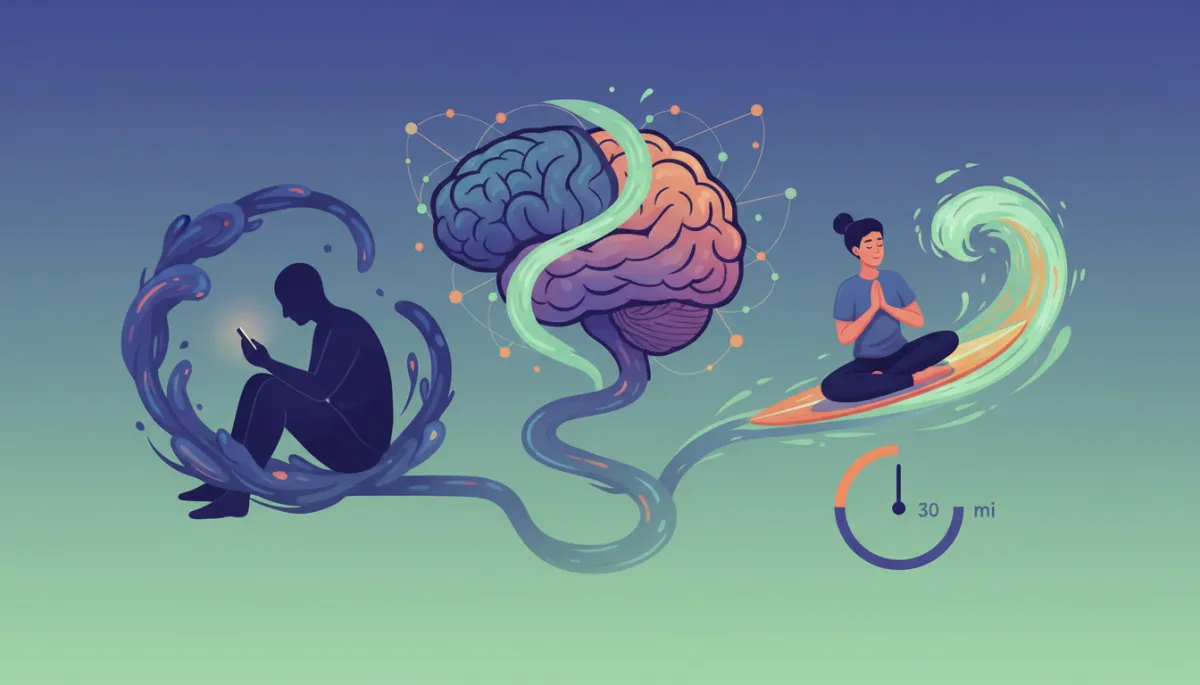
Think about the last time you procrastinated on something important. Maybe you were about to start a report, send a difficult email, or begin studying. Just as you moved toward the task, a wave of discomfort appeared—boredom, anxiety, self-doubt, or simple resistance. Almost instantly, an urge arose: Check your phone. Make a coffee. Open YouTube. Do it later. That urge promised quick relief from discomfort, just like an addictive substance or behavior promises quick relief from stress or emotional pain.
In both addiction and procrastination, the pattern is the same: uncomfortable feeling → urge → habitual response. We often focus only on the behavior (“I waste time,” “I drink,” “I binge-watch”), but the engine underneath is the same: powerful, momentary urges that push us toward a familiar escape route.
Habits as a Link Between Stimulus and Response
To understand why urges feel so compelling, it helps to look at habit formation. A habit is essentially a learned link between a stimulus (something that triggers you) and a response (what you do next). Over time, this link becomes so automatic that you can move from trigger to behavior without any conscious decision-making in between.
For procrastination, the stimulus might be:
Opening your laptop to work on a difficult task
Seeing a long to-do list
Feeling tired, overwhelmed, or unsure where to start
The response might be:
Checking your phone “for just a second”
Starting a different, easier task instead
Wandering to the kitchen for a snack
In between stimulus and response lies the urge: a wave of internal pressure that says, “Do the easy thing. Avoid the discomfort.” Each time you obey that urge, you strengthen the habit loop. Your brain learns, “When I feel this discomfort, this escape gives me relief,” and the link between stimulus and response becomes tighter and faster.
📌 Key Takeaway: Habits don’t just live in your actions; they live in the connection between what you feel (stimulus), what you crave (urge), and what you do (response).
Why Resisting Urges Often Makes Them Stronger
Many people try to break bad habits by using sheer willpower: “I will not check my phone.” “I will not snack.” “I will not procrastinate.” On the surface, this sounds sensible. But there’s a problem: fighting urges head-on often makes them louder, not weaker, in the same way that trying not to think about something makes it pop into your mind even more frequently.
When you resist an urge with tension—clenching your jaw, criticizing yourself, mentally shouting “No!”—you’re still pouring attention and emotional energy into it. The urge becomes the center of your mental universe. You’re not free from it; you’re locked in a wrestling match with it. And just like in addiction, this internal struggle can actually increase the craving, because the brain interprets all that attention as a sign that the urge is extremely important.
Over time, this pattern creates a vicious cycle:
You feel an urge to procrastinate or indulge a bad habit.
You fight it with force and self-judgment.
The urge feels more intense and more unbearable.
You finally give in, just to get relief from the struggle.
The brain then learns not only that the habit brings relief, but that giving in is the only way to stop the inner battle. This is one reason why resisting urges can make them feel so overwhelming—just as in addiction, the more you wrestle, the more powerful the craving can seem.
The Good News: Urges Are Temporary (Usually Under 30 Minutes)
Here’s a crucial fact that changes everything: urges are temporary. They rise, peak, and fall like waves. Research and clinical experience in addiction recovery show that most urges, even intense ones, typically last no longer than about 30 minutes if you don’t feed them with attention, stories, or action.
That doesn’t mean those 30 minutes always feel pleasant. But it does mean that urges are not permanent, and they are not all-powerful. The feeling that “this will never stop unless I give in” is an illusion created by the urge itself. In reality, your nervous system cannot sustain that peak intensity forever. If you learn how to ride out the wave, it will naturally subside on its own.
💡 Pro Tip: The next time you feel an urge to procrastinate, quietly note the time. Remind yourself, “This is a wave. If I don’t feed it, it will likely fade in less than 30 minutes.”
What Is Urge Surfing?
To work with these waves of craving, psychologists developed a mindfulness-based technique called urge surfing. Originally created for addiction recovery, urge surfing teaches people to relate to cravings in a new way: not as enemies to fight or commands to obey, but as temporary experiences to observe and ride out with curiosity and acceptance.
The metaphor is simple and powerful. Imagine you’re in the ocean. A wave approaches. You have three basic options:
Try to stop the wave (impossible).
Let it knock you over and drag you wherever it wants (giving in).
Learn to surf it—riding its energy without being swallowed by it.
Urge surfing chooses the third option. Instead of resisting or obeying, you observe the urge: where you feel it in your body, how it changes over time, what thoughts it whispers. You stay present, curious, and accepting, like a surfer staying balanced on the board. You don’t try to make the wave smaller; you simply ride it until it naturally loses strength and dissolves.
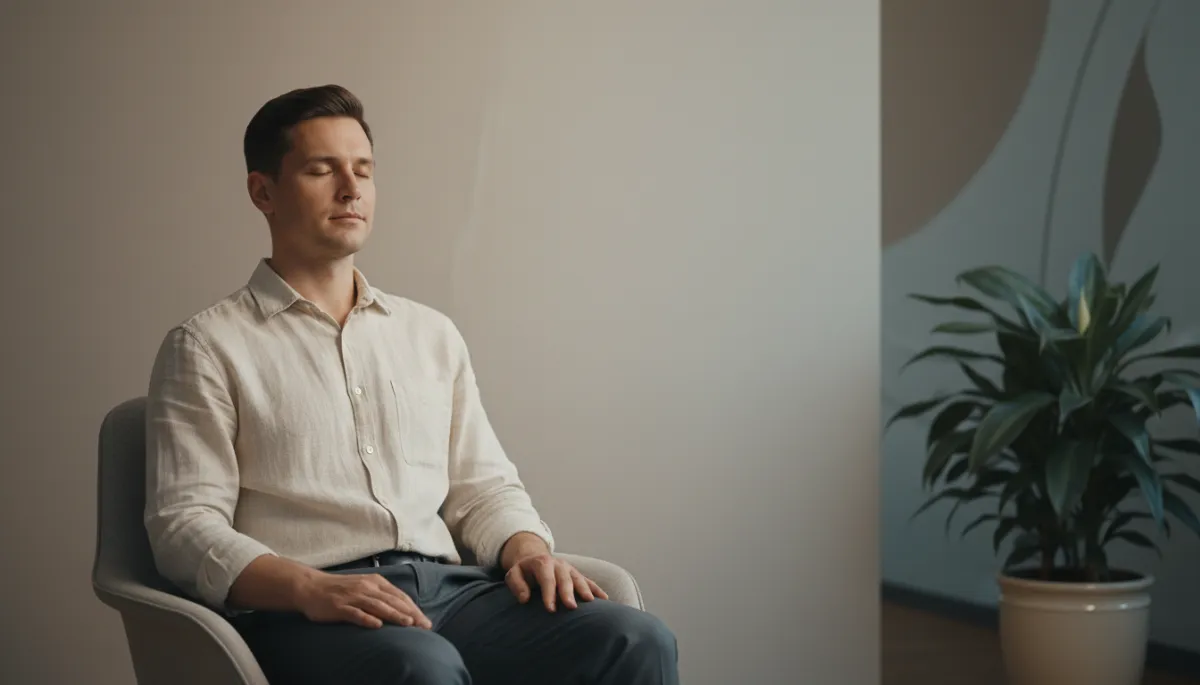
Observing urges with calm curiosity weakens their grip over time.
How Urge Surfing Works: Step-by-Step
Here’s a simple version of urge surfing you can use for procrastination or any bad habit:
Notice the stimulus. You sit down to work, open your inbox, or look at your to-do list. This is the trigger moment. Simply acknowledge: “Here’s the situation that usually leads me to procrastinate.”
Identify the urge. Maybe you feel a pull to check your phone, open another tab, or tidy your desk. Mentally label it: “I’m noticing an urge to check social media” or “Here’s the urge to do this later.”
Turn toward the body. Instead of focusing on the story in your head (“This is too hard,” “I’ll never finish”), bring your attention to your physical sensations. Where do you feel the urge? In your chest, stomach, throat, hands? Is it tight, restless, hot, heavy?
Watch the wave rise and fall. For a few minutes, simply breathe and observe the sensations. Notice if they move, intensify, soften, or shift location. You might say quietly to yourself, “Rising…peaking…falling…” as if you’re narrating the wave’s journey.
Allow, don’t argue. This is the heart of urge surfing. You are not trying to push the urge away or convince yourself it’s bad. You’re allowing it to be present without acting on it. You might think, “It’s okay that this urge is here. I don’t have to follow it.”
Choose your response. Once the intensity has lessened—even just a little—gently bring your attention back to a small, manageable action related to your task: writing one sentence, answering one email, reading one page. The key is that you’re acting from choice, not from the urge.
Applying Urge Surfing to Procrastination and Everyday Habits
Although urge surfing was developed to help people manage cravings in addiction, the same principles apply beautifully to everyday habits like procrastination, overeating, mindless scrolling, or even snapping at loved ones. All of these behaviors are fueled by urges that promise quick relief or quick reward. When you learn to surf those urges, you create a small but powerful gap between impulse and action.
For procrastination specifically, urge surfing can help you:
Stay with the discomfort of starting a task without escaping into distractions.
Notice the exact moment you usually abandon your plan—and experiment with staying one minute longer.
Break the automatic link between “I feel overwhelmed” and “I avoid this task.”
Over time, each moment of urge surfing slightly weakens the old habit loop. Your brain learns a new association: “I can feel this urge fully and still choose what matters.” This is the same learning process that helps people in addiction recovery regain freedom over their choices. You’re not trying to become a different person overnight; you’re teaching your brain, moment by moment, that urges are survivable and optional, not commands you must obey.
Acceptance: The Counterintuitive Secret to Changing Habits
One of the most counterintuitive ideas in this approach is that acceptance, not resistance, is what ultimately loosens a habit’s grip. Accepting an urge does not mean liking it, agreeing with it, or giving in to it. It simply means allowing it to exist in your awareness without pushing it away or acting it out.
When you accept an urge, you might say to yourself:
“I notice a strong urge to procrastinate right now. It’s okay that it’s here.”
“My chest feels tight, and I want to check my phone. I can just feel this.”
“This is uncomfortable, but it’s temporary. I don’t have to obey it.”
Acceptance softens the internal struggle. Instead of two parts of you fighting—one yelling “Do it!” and the other yelling “Don’t!”—there is a quieter, more spacious awareness that can see both the urge and your deeper values. From that space, you can choose actions that align with who you want to be, rather than what your momentary impulses demand.
Start by Simply Noticing Your Habits
Before you can surf urges, you need to see them. Many of our bad habits run on autopilot. We procrastinate, snack, scroll, or snap without fully realizing what triggered us or how quickly we moved from urge to action. The first step in changing this is simply to become a curious observer of your own behavior.
Over the next few days, pay attention to:
When you tend to procrastinate the most (time of day, type of task, mood).
What you usually do instead (phone, email, cleaning, chatting).
How it feels in your body right before you switch activities.
You don’t have to change anything yet. Just notice. Treat yourself like a scientist gathering data, not a judge handing down verdicts. The more clearly you can see your own habit loops—the stimulus, the urge, the response—the easier it becomes to insert a new choice into that sequence.
📌 Key Takeaway: Awareness is the foundation of change. You can’t surf a wave you refuse to see.
Your Call to Action: Identify and Observe Your Habits This Week
To put this into practice, here’s a simple assignment for the days ahead. This is not about perfection; it’s about building awareness and starting to relate to your urges differently, just like people in addiction recovery learn to do with cravings.
Identify 1–3 habits you’d like to understand better. Procrastination might be at the top of your list, but you can also include things like late-night snacking, endless scrolling, or reacting sharply in conversations.
Write them down. On paper or in a notes app, create a short list: “When I typically do this,” “What usually triggers it,” and “What I tend to feel right before it happens.”
Practice noticing—without changing—at least once per day. When you catch yourself on the verge of a habit, pause for a few seconds. Mentally note: “Here’s the urge to procrastinate,” or “Here’s the urge to snack.” Where do you feel it? How strong is it on a scale of 1–10? Just observe.
If you feel ready, you can even try a short round of urge surfing: set a timer for five minutes, sit with the urge, and watch it like a wave—no resistance, no obedience, just awareness. Whether you give in afterward or not, you’ve already begun to change the pattern by noticing it instead of acting automatically.
Looking Ahead: From Urge Awareness to Lasting Change
In this first part of the series, we’ve looked at how bad habits like procrastination resemble addiction: both are driven by urges, both are strengthened by automatic links between stimulus and response, and both can be made worse by fighting urges with raw resistance. You’ve also learned that urges are temporary—usually lasting no more than about 30 minutes—and that urge surfing, a mindfulness practice born in addiction treatment, offers a practical way to ride out those waves without being controlled by them.
For now, your job is not to fix everything at once. It’s to notice: notice your bad habits, notice the urges that drive them, and notice how those urges influence your behavior. The more you see, the more choice you’ll have. In the next parts of this series, we’ll build on this foundation—exploring how to redesign your environment, reshape your identity, and create new, supportive habits that align with your values.
For today, take one small step: choose a habit, write it down, and commit to noticing the next time the urge appears. You don’t have to win a battle. You just have to be present for the wave.
