change your mind, change your life

Embrace Change Anytime: No Perfect Moment Needed
Personal Growth, Habits, Mindset
Stop Waiting for January: Why Real Change Doesn’t Need a Perfect Moment
The calendar doesn’t decide when your life changes—you do. Lasting reinvention comes from the choices you make repeatedly, not from a date, a mood, or a sudden surge of willpower.
The Myth of the “Perfect Time” to Change
We are surrounded by messages that quietly whisper, “Wait for the right moment.” A new year, a new month, a birthday, a Monday, the first of the quarter—these dates are marketed as magical starting lines. Gyms fill up in January. Journals sell out in December. You might even catch yourself thinking, “I’ll start fresh when things calm down” or “I’ll be more disciplined next month.”
Underneath this is a powerful myth: change must start at a specific time to “work.” We treat certain dates like they hold more willpower, more clarity, more motivation than an ordinary Tuesday afternoon. But the truth is uncomfortable and freeing at the same time: no date on the calendar can change you if you’re not willing to change how you live today.
The “perfect time” myth is attractive because it delays discomfort. It lets you feel hopeful without acting yet. You can imagine your future self as fitter, calmer, more focused—without facing the reality of what that will require from you now. But waiting for the right moment quietly trains you to believe your power lies somewhere out there, in the future, instead of in the choices you are capable of making right here, in this moment.
Real Reinvention Is Built from Ongoing Choices, Not Grand Resolutions
When people talk about “reinventing themselves,” they often imagine a dramatic turning point: a new job, a big move, a breakup, a revelation on a mountaintop. In stories, change looks like a single, cinematic moment. In real life, it’s almost always quieter. It looks like:
Choosing to get up after you hit snooze—again—and walking around the block anyway.
Saying “no” to one more commitment so you can protect time to think, read, or rest.
Sending the uncomfortable email you’ve avoided because you want to be more honest and direct.
Reinvention is not a single decision; it’s a decision repeated. It’s a direction you keep choosing through small, often unglamorous actions. Ongoing choices are what turn your life, degree by degree, until you look back and realize you’re standing somewhere entirely different than where you started.
This is good news. If real change is built from ongoing choices, then you haven’t missed your chance. There is no “too late” date stamped on growth. The most important decision is not, “Will I transform this year?” but, “What direction am I choosing in this moment—and then the next one?”
Why Disruptions Expose the Limits of Willpower-Based Goals
Think about the last time you made a strong resolution. Maybe you promised to work out five times a week, meditate daily, or stop checking your phone after 9 p.m. For a few days—or even a few weeks—you were on track. Then something happened:
A deadline at work kept you up late.
You got sick, or a family member needed help.
Travel disrupted your schedule.
A bout of low mood or stress drained your motivation.
Suddenly, the streak broke. A day off became a week off, and the familiar story crept in: “I just don’t have enough discipline. I’ll try again later.” It’s tempting to interpret these disruptions as proof that you failed. But they’re actually proof of something else: willpower-based goals are fragile in real life.
Life is not a controlled experiment. It’s messy, unpredictable, and often inconvenient. Any plan that relies on you feeling consistently motivated, energized, and focused is built on a shaky foundation. Disruptions don’t mean you’re broken; they reveal that your approach is. They show you what happens when your strategy depends on a mood that cannot last forever.
💡 Key Insight: When a minor disruption can completely derail your goal, it’s a sign the goal is resting on willpower, not on systems, habits, and identity.
Instead of asking, “Why can’t I stick to anything?” you can ask a more useful question: “What would have to be true about my habits and identity for this change to survive real life?” That question shifts you from blaming yourself to examining how you’re actually living.
From “Try Harder” to “Look Deeper”: Identity and Habits as the Real Starting Point
When a goal falls apart, most people respond the same way: they tighten the rules and double down on effort. “This time I’ll be serious. No cheat days. No excuses. I just need to try harder.” But trying harder at the same strategy rarely leads to different results. It just makes you more exhausted and more convinced that you’re the problem.
Sustainable change doesn’t begin with more effort; it begins with more honesty. Specifically, honesty about two things: your identity and your habits.
1. Identity: Who You Believe You Are
We act in ways that are consistent with who we believe we are. If, deep down, you see yourself as “the disorganized one,” “the person who never finishes anything,” or “the emotional eater,” your brain will quietly steer you back toward behaviors that match that story—even when you set ambitious goals. The identity wins over the intention.
Shifting identity doesn’t mean pretending. It means choosing a new narrative that you’re willing to grow into. For example:
From “I’m terrible with money” to “I’m someone who is learning to pay attention to my finances.”
From “I hate exercise” to “I’m a person who moves my body in ways that respect it.”
From “I’m always overwhelmed” to “I’m someone who is building systems to create more calm.”
Once you begin to shift identity, your goals stop being about proving something and start being about expressing who you are becoming. You’re not forcing yourself to behave; you’re aligning your behavior with a chosen direction for your life.
2. Habits: How Your Days Actually Run
If identity is the story, habits are the script. They are the tiny, repeated actions that quietly decide your outcomes. You don’t rise to the level of your goals; you fall to the level of your habits. If you want different results, you have to get curious about the routines that shape your days:
What do your mornings look like before the day grabs you?
How do you respond to stress—scrolling, snacking, avoiding, overworking?
Where do you lose time without noticing—social media, email, TV, overthinking?
Examining habits is not about shaming yourself; it’s about seeing clearly. When you understand how your days are actually constructed, you can begin to make small, targeted adjustments that support the identity you’re choosing. That might mean:
Putting your phone in another room at night so you can read or sleep instead of scrolling.
Laying out your workout clothes ahead of time so movement becomes the default, not a decision you have to negotiate with yourself.
Scheduling a 10-minute financial check-in once a week, no matter how small the numbers are.
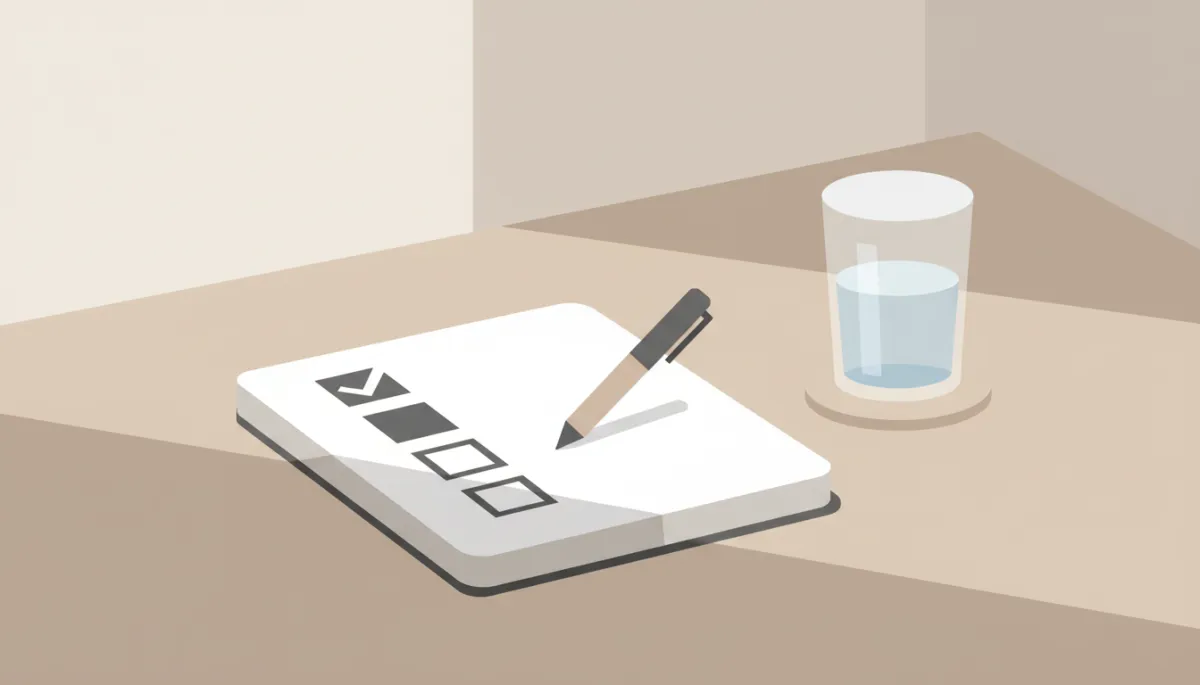
Small, repeatable habits quietly reshape your direction more than rare bursts of motivation.
The Power of a Clear Decision: Owning Your Direction, Anytime
If dates don’t hold the power, what does? A clear decision to own your direction. Not a vague wish, not a half-hearted “I should probably,” but a grounded commitment: “This is the kind of person I am choosing to become, and I will keep choosing it, regardless of timing or mood.”
Owning your direction means you stop outsourcing responsibility to the calendar, to your circumstances, or to your feelings. You recognize that moods will rise and fall, motivation will spike and crash, and life will continue to be inconvenient. And still, within that, you have agency over what you do next. You can decide:
“Today was chaotic, but I will still take one small step that aligns with my chosen identity.”
“I feel low right now, and I can still act in a way my future self will respect.”
“I slipped yesterday, but that does not decide who I am today.”
📌 Key Takeaway: The decision that changes your life is not, “I will never fail again.” It’s, “I will keep returning to this direction, no matter how many times I have to begin again.”
This kind of decision is quiet but powerful. It doesn’t require a big announcement. You don’t need to post about it, buy a new planner, or wait for the first of the month. You can make it while washing dishes, sitting in traffic, or lying awake at night. What matters is not the drama of the moment, but the depth of your willingness to live that decision out in ordinary days.
Durable Growth: Consistency and Honest Self-Awareness Working Together
When you stop chasing the “perfect time” and instead commit to ongoing choices, something important happens: your growth becomes durable. It doesn’t vanish the moment life gets messy, because it’s not built on flawless execution. It’s built on two things working together: consistent action and honest self-awareness.
Consistent Action: Imperfect, Repeated Steps
Consistency doesn’t mean doing the same thing every day without fail. It means returning to your direction more often than you abandon it. It looks like:
Walking for 10 minutes when you don’t have the energy for a full workout, instead of doing nothing at all.
Writing one paragraph on a difficult day instead of waiting for a three-hour block of inspiration.
Cooking one simple meal at home this week instead of expecting yourself to overhaul your entire diet overnight.
These actions might feel small, even insignificant in the moment. But they are how you prove to yourself, again and again, “I am the kind of person who comes back.” Over time, that identity becomes stable, and the habits that support it become easier to maintain—even when your mood fluctuates or life is demanding.
Honest Self-Awareness: Seeing Without Excuses or Cruelty
The second ingredient in durable growth is honest self-awareness. This is not harsh self-criticism or endless analysis. It’s the ability to look at your behavior with clarity and compassion, and to ask:
“What actually happened this week that pulled me off track?”
“What was I feeling before I reached for that habit I’m trying to change?”
“What small adjustment would make it easier to do the right thing next time?”
Honest self-awareness turns every disruption into data, not a verdict on your worth. Instead of concluding “I’m hopeless,” you can conclude, “This strategy doesn’t fit my real life yet—how can I change it?” That mindset keeps you in motion. You’re not waiting for a fresh start; you’re continuously adjusting your path as you go.
Bringing It All Together: Your Next Step Starts Now, Not Later
The myth that change must start at a specific time—New Year’s Day, a birthday, the first of the month—keeps countless people stuck in a waiting room. They sit there with good intentions, year after year, hoping that the next “fresh start” will finally give them the discipline they’ve been missing. But lasting reinvention doesn’t arrive on a date. It emerges from ongoing choices, made in the middle of your actual life, with all its interruptions and imperfections.
Disruptions are not evidence that you’re weak; they are evidence that willpower alone cannot carry you through a complex, demanding world. To create sustainable change, you don’t need more self-punishment or stricter rules. You need to shift your focus from trying harder to examining who you believe you are and how your days are truly structured.
When you make a clear decision to own your direction—regardless of timing or mood—you reclaim your power. You stop waiting for a ceremonial beginning and start living as the person you intend to become, one choice at a time. From there, durable growth is not a miracle; it’s a natural outcome of consistent action and honest self-awareness, repeated over weeks, months, and years.
Try This Today: Choose one identity statement you’re willing to grow into—for example, “I’m someone who takes care of my body,” or “I’m someone who follows through on what matters.” Then take one small, concrete action today that aligns with that identity. Not next Monday. Not next month. Today.
You don’t need a new year, a new planner, or a perfect morning to begin. You only need a decision and a first step. The rest is repetition. And every time you choose in alignment with who you’re becoming, you are quietly, steadily reinventing your life—no special date required.

Unlock free
MONTHLY MOTIVATION
Smart strategies, PRODUCTIVITY TIPS, and resources you can't live without, delivered to your inbox every MONTH.
Follow Along


your cure for being Common.
Quick Links
Copyright 2026 results.coaching. All Rights Reserved.