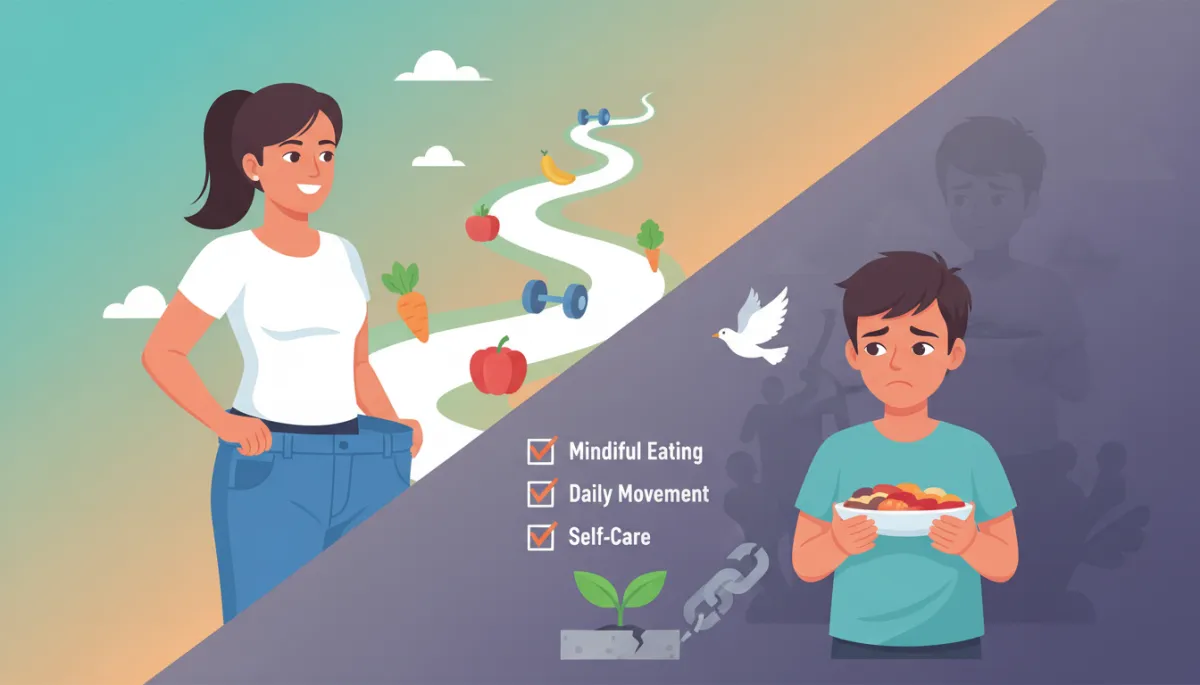
Transforming Life: 40 Pounds Lost in 10 Weeks
Nutrition, Weight Loss, Personal Growth
Ten Weeks, Forty Pounds, and a New Life: How I’m Rewiring a Lifetime of Food Addiction
This is not a story about a “diet.” It’s the story of how, in just ten weeks, I’ve lost 40 pounds on a 160‑pound journey—and, more importantly, how I’ve begun to break a lifelong addiction to food rooted in childhood abuse. It’s about learning to make conscious choices, one drive‑thru I don’t pull into at a time, and discovering that real change is a lifestyle, not a temporary plan.
Ten Weeks Ago: The Moment I Finally Said “Enough”
Ten weeks ago, I started a nutritional program with a goal that felt almost impossible: losing 160 pounds. At my starting weight, every step up a staircase felt like a workout, and every photo of myself was something I avoided. I wasn’t just carrying extra weight; I was carrying decades of pain, shame, and coping mechanisms that had all collected around one thing—food.
Today, I am 40 pounds lighter. That’s one quarter of the way to my ultimate goal. But the number on the scale is only part of the story. The real victory is that, for the first time in my life, I feel like I am in control of food, instead of food controlling me. The nutritional program gave me structure—what to eat, when to eat, how much to eat—but it also became a mirror, reflecting back the relationship I’d had with food since childhood, and asking me whether I was finally ready to change it.
When Food Is Comfort: Addiction Born from Childhood Abuse
My addiction to food didn’t start with late‑night snacks as an adult. It started as a child, in a home where safety wasn’t guaranteed and love was conditional. Abuse leaves marks that don’t show up on the skin. It teaches you that you can’t trust people, that you can’t trust your environment, and sometimes, that you can’t even trust yourself. In that chaos, food became the one thing that felt predictable. It was always there. It didn’t yell. It didn’t hit. It didn’t judge. It soothed, even if only for a moment.
Over time, that comfort turned into dependency. I didn’t eat because I was hungry; I ate because I was lonely, scared, ashamed, bored, or numb. Food was my reward after a hard day, my distraction when memories resurfaced, my way of avoiding feelings I didn’t know how to handle. If you’ve ever found yourself standing in front of the fridge, not even sure how you got there, you know what I mean. My body was full, but I was starving for safety, validation, and peace.
📌 Key Takeaway: Food addiction is rarely about greed or lack of willpower; it is often about pain, protection, and patterns learned in survival mode.
What Changed: A Nutritional Program That Asked Me to Show Up, Daily
The nutritional program I started ten weeks ago is simple on paper: balanced meals, portion control, regular timing, plenty of water, and a clear structure for what to eat. There’s nothing flashy about it. No magic shakes, no “eat whatever you want and still lose weight” promises. Just a framework designed to nourish my body consistently and reduce the chaos around food decisions.
But the real power of the program is that it forced me to be conscious. Every meal is a choice. Every snack is a decision. I can’t just drift into the drive‑thru and pretend it “just happened.” I have to plan, prepare, and pay attention. And that awareness is what began to loosen the grip of my addiction. Instead of reacting automatically, I started asking myself questions:
Am I actually hungry, or am I stressed, tired, or triggered?
Will this choice move me closer to the person I want to become?
What will I feel like ten minutes after I eat this? Proud—or defeated?
That questioning didn’t come naturally. In the beginning, it felt like I was constantly arguing with myself. The impulse to soothe with food was still there, especially when old memories surfaced or when I felt overwhelmed. But the program gave me something I had never really had before: a clear path and a set of boundaries that I chose for myself, not ones forced on me by someone else.

Every time I drive past a drive‑thru, I cast a small but powerful vote for my future self.
Gaining Control Over Cravings: From “I Can’t Help It” to “I Choose”
Cravings used to feel like commands. The thought of a burger and fries from a drive‑thru didn’t arrive as a suggestion; it arrived as a demand, backed by years of repetition. I would find myself pulling into the line almost before I had consciously decided to go there. That’s how addiction works—it shortcuts your decision‑making and turns reaction into routine.
The first major shift in these ten weeks was learning to insert a pause between the craving and the action. The program helped by giving me alternatives: a planned meal waiting at home, a healthy snack in my bag, a glass of water and a five‑minute walk instead of an instant food fix. When a craving hit, I started experimenting with a simple phrase: “I hear you, but I’m choosing something else.”
The first time I drove past a drive‑thru I used to visit several times a week, it felt almost like grief. My brain screamed that I was denying myself comfort. My body felt restless. But when I made it home, ate the meal I had planned, and realized I was both full and proud of myself, something subtle shifted. The craving had not disappeared, but I had proven—to myself—that I could survive not obeying it. That small victory became a reference point the next time temptation appeared.
💡 Pro Tip: You don’t have to “kill” a craving to win. You just have to outlast it long enough to choose differently once.
Not a Diet, a Lifestyle: Why the Language You Use Matters
For most of my life, I thought in terms of diets. A diet had a start date, an end date, and usually a crash somewhere in between. I’d restrict myself harshly for a few weeks, lose some weight, and then rebound even harder when the emotional load got too heavy. Diets always felt like punishment—something to “get through” before I could go back to “normal.”
This time, I made a different decision: this is not a diet; this is my new life. That mental shift changed everything. Instead of asking, “Can I survive this for a few weeks?” I started asking, “Can I live like this?” The meals I’m eating now are not temporary; they are building blocks for the rest of my life. The goal isn’t just to lose 160 pounds; it’s to become the kind of person who naturally maintains a healthy weight because their habits align with their values.
Thinking in terms of lifestyle also softened the perfectionism that used to sabotage me. On a diet, one “bad” meal meant failure, and failure meant giving up. In a lifestyle, one off‑plan choice is just that—a choice. I can learn from it and make a different choice at the next opportunity. There is no wagon to fall off of; there is just the path I’m walking, one step at a time.
How Changing My Eating Changed Everything Else: Exercise, Productivity, and Growth
One of the most surprising parts of this journey is how changing my eating habits has rippled out into every other area of my life. When I started, I barely thought about exercise. Moving my body felt like a chore, and I was embarrassed by how out of breath I got doing simple things. But as the pounds started to come off and my energy increased, I noticed something: my body wanted to move. Instead of collapsing on the couch after work, I started taking short walks. At first, it was five minutes. Then ten. Then twenty. Now, I actually look forward to feeling my heart beat a little faster, to noticing that stairs are no longer my enemy.
The clarity I gained from fueling my body properly also spilled into my productivity. Before, I lived in a fog of sugar crashes and heavy meals. I’d promise myself I’d “get things done tomorrow,” but tomorrow always arrived with the same sluggishness. As my blood sugar stabilized and my sleep improved, I found myself more focused at work, more present in conversations, and more willing to tackle tasks I’d been avoiding. I started organizing my space, planning my days, and setting goals beyond the scale—goals about my career, my relationships, and my mental health.
This is the hidden gift of a true lifestyle change: when you prove to yourself that you can do something as challenging as rewiring a food addiction, you begin to believe that other long‑standing patterns can change too. The same discipline that helps me say no to the drive‑thru helps me say no to procrastination, to toxic relationships, to self‑talk that tears me down. I’m not just losing weight; I’m rebuilding my identity.
The Power of Tiny, Conscious Choices: How Habits Are Really Built
It’s tempting to look at “40 pounds lost in 10 weeks” and imagine some dramatic transformation powered by huge, heroic decisions. In reality, my progress has been built on hundreds of small, almost invisible choices:
Choosing water instead of soda when I’m out with friends.
Packing a balanced lunch instead of “winging it” and ending up at a fast‑food place.
Walking for ten minutes when I feel the urge to emotionally eat, just to give myself space to decide.
Logging my meals honestly, even on days when I’m not proud of my choices.
At first, these choices required a lot of mental effort. I had to constantly remind myself of my goal, my why, and the pain I was choosing to leave behind. But something beautiful happens when you repeat a conscious choice often enough: it becomes a habit. The drive‑thru I used to turn into without thinking is now the place I automatically pass by. The late‑night binge that once felt inevitable has been replaced by a routine of making tea, reading, or going to bed earlier. The work is still real, but the resistance is softer because the new pattern is starting to feel familiar.
“Every choice you make is a vote for the type of person you wish to become.”
— James Clear
I think about that quote often. Every time I say no to an old habit and yes to a new one, I’m casting a vote for a healthier, stronger, more present version of myself. Forty pounds lost is not a miracle; it’s the sum of those votes, counted one day at a time.
Your Turn: Identifying Your Own Vices and How They Use You
Maybe food isn’t your struggle. Maybe your “drive‑thru” is something else—alcohol, scrolling endlessly on your phone, shopping, gaming, work, or even relationships that you know are unhealthy. We all have something we turn to when we don’t want to feel what we’re feeling. We all have a habit that promises comfort but quietly steals our energy, our time, and our self‑respect.
If you’re reading this and recognizing yourself in my story, I invite you to try a simple exercise:
Name your vice. Be honest. What do you turn to when you’re hurting, bored, or overwhelmed?
Notice the pattern. When does it show up? What usually happens right before you reach for it?
Ask how it uses you. What does this habit take from you—time, money, health, confidence, relationships?
Choose one small alternative. Not a grand overhaul—just one different action you can take the next time the urge appears.
You don’t have to fix everything overnight. You don’t have to be perfect. You simply have to be willing to see the habit clearly and to make one conscious choice in a new direction. That’s how my journey started: not with a dramatic declaration, but with a quiet decision to try something different for one day, then another, then another.
Building a Better Version of Yourself, One Day at a Time
Ten weeks ago, I was living in a body and a mind shaped by years of pain, secrecy, and survival. Food was my shield, my escape, and my prison. Today, I’m still on the journey—120 pounds to go, many cravings still to face, many emotional layers still to peel back. But I am no longer powerless. I am no longer living on autopilot. I am consciously choosing, day by day, to build a life that reflects who I want to be, not just what I’ve been through.
If you take anything from my story, let it be this: you are not your habits. You are not your addiction, your past, or your worst day. Those things have shaped you, but they do not have to define your future. You have the power to pause, to notice, and to choose again. You can design a lifestyle that supports your healing instead of numbing it, that strengthens your body instead of punishing it, that frees your mind instead of trapping it in shame.
My 40‑pound loss is just the beginning of a much larger transformation. The real success is that I now believe I am worth the effort it takes to change. I believe you are, too. Whether your goal is to lose weight, reclaim your health, or break free from another kind of addiction, your future is being built right now in the choices you make today. They may seem small, but they are not insignificant. They are the bricks of the life you’re creating—one meal, one walk, one “no” to an old habit, and one “yes” to a better version of yourself at a time.
📌 Key Takeaway: You don’t have to wait to feel ready or unbroken. Start where you are, with what you have, and let your next conscious choice be the first step toward the person you’re becoming.
