
Stop Taking On Others' Moods: Set Healthy Boundaries
Mental Health, Emotional Responsibility, Boundaries
Stop Carrying What Isn’t Yours: The Power of Not Taking On Other People’s Moods
If you’ve ever walked into a room feeling okay and walked out feeling heavy, anxious, or guilty for no clear reason, you’re not alone. Many caring, empathetic people unintentionally take on other people’s moods and emotions as if they’re responsible for fixing them. This blog explores why that happens, why it drains you, and how emotional responsibility, healthy boundaries, emotional intelligence, and self-leadership can help you stay compassionate without losing yourself.
Why You Absorb Other People’s Moods (And Why It’s Not Your Fault)
Many people who take on others’ moods are naturally empathetic, sensitive, or raised in environments where they felt responsible for keeping the peace. Maybe you learned early on to scan the room, read everyone’s tone, and adjust yourself to avoid conflict. Over time, that survival skill can turn into an unconscious habit: if someone is upset, you feel you must fix it—or you feel bad until they feel better.
This doesn’t mean anything is “wrong” with you. It means you care deeply. But caring does not have to mean carrying. The moment you start believing you are responsible for how others feel, you cross a line that quietly erodes your energy, your clarity, and your sense of self. Learning to step back from that role is not cold or selfish; it is an act of emotional maturity and self-respect.
Emotional Responsibility: What’s Yours and What Isn’t
Emotional responsibility is the understanding that each person is ultimately responsible for their own feelings, reactions, and healing. That includes you—and it also includes everyone around you. When you practice emotional responsibility, you honor your inner world without taking ownership of someone else’s emotional state. You can care about how they feel without assuming you caused it or must cure it.
A useful way to think about it is this simple question: “Is this mine to carry?” If your partner is stressed about work, their stress is real—but it is still theirs. If a colleague is in a bad mood, their mood may affect you, but it does not belong to you. Emotional responsibility invites you to notice when you’ve picked up something that isn’t yours and gently set it back down, without guilt or defensiveness.
💡 Pro Tip: When you notice yourself feeling heavy after talking to someone, pause and ask, “Is this feeling actually mine, or am I mirroring their state?”
Taking emotional responsibility for yourself also means owning your reactions. If someone is grumpy and you feel hurt, your hurt is yours to soothe. You can acknowledge, “I feel dismissed,” and choose how to respond, instead of unconsciously slipping into people-pleasing, fixing, or shutting down. This shift is deeply empowering: it moves you from feeling at the mercy of others’ moods to feeling anchored in your own center.
Boundaries: Your Invisible Emotional Fence
To stop taking on other people’s moods, you need more than insight—you need boundaries. Boundaries are not walls; they are gentle, firm fences that define where you end and another person begins. They protect your emotional space so you can show up with genuine care instead of resentment, exhaustion, or quiet resentment disguised as “helpfulness.”
Time boundaries: Limiting how long you stay in draining conversations or environments.
Energy boundaries: Choosing when you are available to listen and when you need to step back and recharge.
Responsibility boundaries: Clearly separating what you can support from what only the other person can change.
Compassionate boundaries sound like:
“I’m really sorry you’re going through this. I can listen for about 15 minutes, and then I need to take care of a few things.”
“I care about you, and I also need to protect my own mental space, so I’m going to step away from this conversation for now.”
“I understand you’re upset, but I’m not able to take this on for you. Have you thought about talking to a coach, therapist, or trusted friend?”
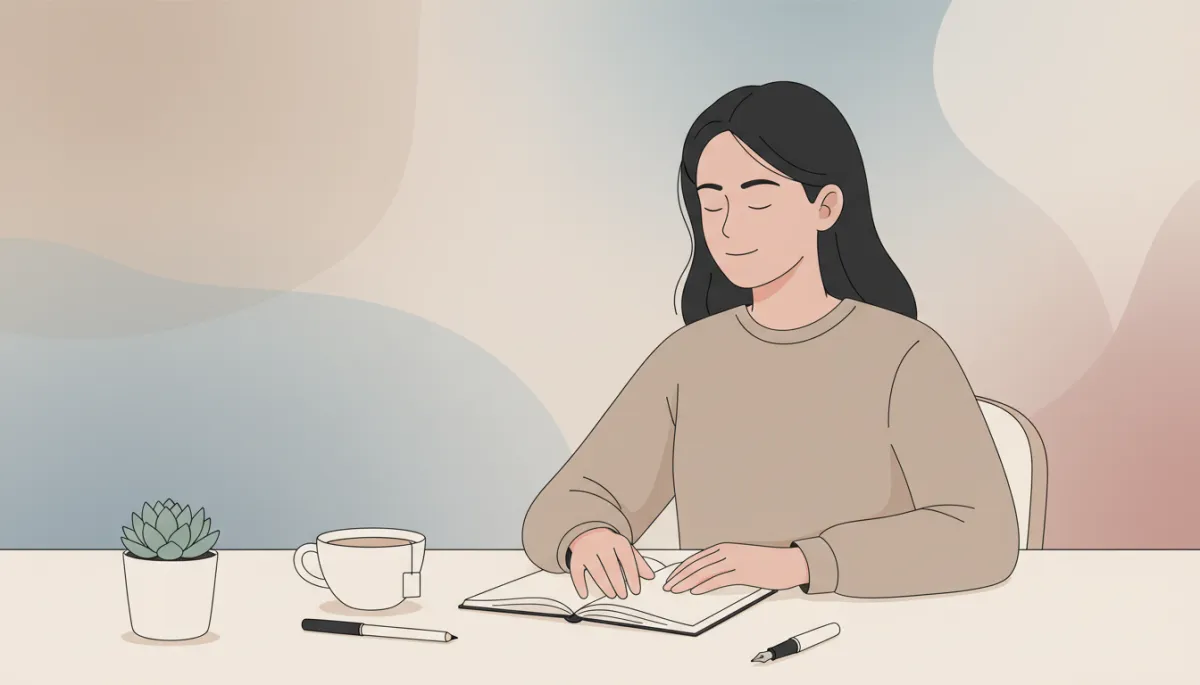
Simple reflective rituals help you reset emotionally after intense interactions.
Boundaries may feel uncomfortable at first, especially if you’re used to over-giving or rescuing. But they are an act of respect for both you and the other person. Without boundaries, you may silently absorb their mood and then feel overwhelmed, resentful, or burned out. With boundaries, you can offer what is genuinely sustainable—and that kind of support is more honest, more stable, and ultimately more loving.
Emotional Intelligence: Noticing Without Absorbing
Emotional intelligence is your ability to recognize, understand, and manage emotions—both your own and other people’s. When you strengthen your emotional intelligence, you become better at noticing what’s happening in a room without drowning in it. You can sense tension, sadness, or frustration, and instead of reacting automatically, you pause, observe, and choose how to respond.
A key emotional intelligence skill is self-awareness. This means regularly checking in with yourself: “What am I feeling right now? Where do I feel it in my body? Does this feeling belong to me, or did it show up after I talked to someone?” That simple inner dialogue helps you distinguish between your own emotions and those you might be absorbing from others. The more clearly you can tell the difference, the easier it becomes to let go of what isn’t yours.
💡 Pro Tip: Try a quick body scan after intense conversations. Notice your shoulders, jaw, chest, and stomach. If you feel tightness that wasn’t there before, gently breathe into that area and imagine sending back any emotional weight that doesn’t belong to you.
Another emotional intelligence skill is empathy with boundaries. Empathy allows you to understand someone’s experience; boundaries ensure you don’t become consumed by it. You might think, “I can see that they’re hurting,” while also remembering, “It’s not my job to live their feelings for them.” This balanced empathy lets you stay kind, grounded, and present, instead of feeling responsible, guilty, or overwhelmed.
Self-Leadership: Being the Leader of Your Inner World
Self-leadership is the practice of guiding yourself with clarity, compassion, and intention. It means you don’t wait for others to set the emotional tone of your day—you choose it for yourself. Instead of being pulled into every mood around you, you decide how you want to feel and what you will and will not take on. You become the leader of your inner world, not a follower of everyone else’s emotional weather.
Practicing self-leadership might look like:
Setting an intention each morning: “Today, I will stay grounded in my own energy, even if others are stressed.”
Choosing how to respond when someone is in a bad mood: pausing, breathing, and deciding whether to engage, support, or step back.
Creating personal rituals—like journaling, walking, or meditation—to help you release emotions you’ve picked up and reconnect with your own center.
Self-leadership is not about controlling everything; it’s about taking loving ownership of your choices. You may not be able to change how someone else shows up, but you can always choose how you show up. Every time you decide, “I will not carry this mood that isn’t mine,” you strengthen your inner leadership and send a powerful message to yourself: my feelings, needs, and limits matter too.
Practical Ways to Stop Taking On Other People’s Moods
1. Name What’s Happening in the Moment
Awareness is your first line of defense. When you feel your mood suddenly shift around someone, silently name it: “I notice I’m feeling anxious after talking to them,” or “My chest feels heavy right now.” This simple step brings you back into conscious choice instead of automatic absorption. From there, you can decide what you want to do next—breathe, step away, or gently redirect the conversation.
2. Use Grounding Techniques to Stay in Your Own Energy
Grounding helps you stay connected to yourself when emotions around you are intense. You might:
Feel your feet on the floor and imagine roots growing into the ground.
Take three slow, deep breaths, lengthening your exhales to calm your nervous system.
Gently press your fingertips together or hold a comforting object to remind yourself, “I am here, in my own body.”
These small practices signal to your mind and body that you are safe and do not need to merge with someone else’s emotional state to stay connected or protected.
3. Practice Compassionate Detachment
Compassionate detachment means you care deeply, but you don’t confuse caring with controlling or carrying. You might think, “I love this person and I want the best for them, but their emotional journey is theirs.” This mindset honors their capacity to grow and heal, and it frees you from the pressure to manage their every feeling. It is a profound expression of respect—for them and for yourself.
4. Communicate Your Limits Clearly and Kindly
People cannot honor boundaries they don’t know exist. Emotional responsibility includes communicating your limits in ways that are honest and kind. You might say:
“I want to support you, and I also need to protect my own mental health, so I’m going to pause this conversation for now.”
“I’m not in the right headspace to talk about something this heavy tonight. Can we revisit it another time, or could you reach out to someone else you trust?”
You are not responsible for how someone reacts to your boundaries, but you are responsible for expressing them respectfully. Over time, this builds relationships that are more balanced, honest, and sustainable.
5. Create Regular “Emotional Reset” Moments
Even with strong emotional intelligence and boundaries, you will occasionally pick up other people’s moods. That’s part of being human. What matters is that you don’t stay stuck there. Build small emotional reset moments into your day: a short walk outside, a few minutes of journaling, a shower where you imagine washing away the emotional residue of the day, or simply sitting quietly with a cup of tea and your hand on your heart, reminding yourself, “I can let go of what isn’t mine.”
You Can Be Kind Without Carrying Everyone’s Pain
Not taking on other people’s moods is not a sign that you are uncaring; it is evidence that you are growing in emotional responsibility, boundaries, emotional intelligence, and self-leadership. You are learning to hold space for others while still holding onto yourself. That is a powerful, courageous shift—especially if you spent years believing your worth was tied to how much you could absorb or fix for those around you.
Imagine what becomes possible when you are no longer weighed down by every mood in the room. You have more energy for your own dreams. You can listen without feeling responsible. You can love people deeply without losing your center. You can show up to your life as the grounded, clear, compassionate person you truly are—because you are finally leading yourself instead of being led by everyone else’s emotional storms.
You deserve that freedom. You deserve relationships where your feelings matter just as much as anyone else’s. You deserve to wake up in the morning and feel your own mood first—not the leftover emotions of everyone around you. With each small step—naming what’s yours, setting a boundary, choosing a reset—you are reclaiming your emotional space and honoring your own heart. And that is not only allowed; it is profoundly brave.
