Boost Productivity with Microbursts: Small Actions, Big Impact
Productivity, Professional Growth, Mindset
Overcoming Overwhelm with Microbursts: Small Actions, Big Momentum
When your to‑do list feels impossible and your mind is spinning, the way out isn’t more thinking—it’s tiny, deliberate action. Microbursts give busy professionals a practical way to move through overwhelm, one small step at a time.
What Exactly Is a Microburst?
A microburst is a deliberately tiny, time‑boxed action that moves you one step closer to a goal. It is intentionally small—so small that it feels almost too easy to start. Think:
Drinking one glass of water instead of “hydrating better this week”
Writing one sentence instead of “finishing the report”
Opening the slide deck and fixing a single slide instead of “rebuilding the whole presentation”
A microburst is not about doing everything. It’s about doing something—a specific, concrete action that can usually be done in 30 seconds to five minutes. The power of microbursts lies in their simplicity: they bypass the mental resistance that comes with big, vague, or emotionally loaded tasks and give you a single, clear next move.
📌 Key Takeaway: A microburst is the smallest meaningful action you can take right now—not the whole task, just the first step.
Why Overwhelm Hits Professionals So Hard
Overwhelm isn’t just “having a lot to do.” It’s the mental state that shows up when your responsibilities, expectations, and worries all pile up at once. For professionals, this often looks like:
Competing deadlines and priorities from multiple stakeholders
Big, ambiguous projects with unclear starting points
Constant context‑switching between meetings, messages, and deep work
Internal pressure to perform at a high level all the time
When everything feels urgent and important, your brain does something understandable but unhelpful: it freezes. You think about the work instead of doing the work. You mentally rehearse worst‑case scenarios, replay conversations, or endlessly reorganize your task list—without actually completing anything.
This is why action, not thinking, is the key to moving past overwhelm. Your mind can’t think its way out of a jam it behaved itself into. You have to act your way out, one small, manageable step at a time. Microbursts give you a structured way to do exactly that.
Why Microbursts Work: The Psychology Behind Tiny Actions
Microbursts may sound almost too simple, but they are grounded in how your brain and behavior actually work. Here are four reasons they are so effective for professionals dealing with overwhelm.
1. They Lower the “Activation Energy” of Starting
Starting is often the hardest part. Big tasks feel heavy. Your brain anticipates effort, potential failure, or judgment, and it pushes back. A microburst sidesteps this resistance by making the first step so small that your brain can’t justify avoiding it. It’s easier to say “I’ll write one sentence” than “I’ll finish this 20‑page report.”
2. They Create Quick Wins and Dopamine Hits
Completing even a tiny action gives you a small sense of accomplishment. That “I did it” moment releases dopamine, a neurotransmitter associated with motivation and reward. Those quick wins matter. They shift your state from stuck to moving, from passive to active. Once you’ve taken one small step, taking another feels more possible.
3. They Turn Vague Worry into Concrete Progress
Overwhelm thrives on vagueness: “This project is a mess,” “I’ll never catch up,” “There’s just too much.” Microbursts force you to define a single, concrete action: send one email, schedule one meeting, draft one bullet point. This specificity breaks the spell of amorphous anxiety and replaces it with measurable progress.
4. They Build Momentum and Clarity Through Doing
Action generates information. When you write the first sentence, you suddenly see what the second sentence should be. When you open the spreadsheet, you realize the numbers aren’t as bad as you feared—or you see exactly where to focus. Microbursts create momentum and clarity by getting you into motion. You learn more in five minutes of doing than in 30 minutes of worrying.
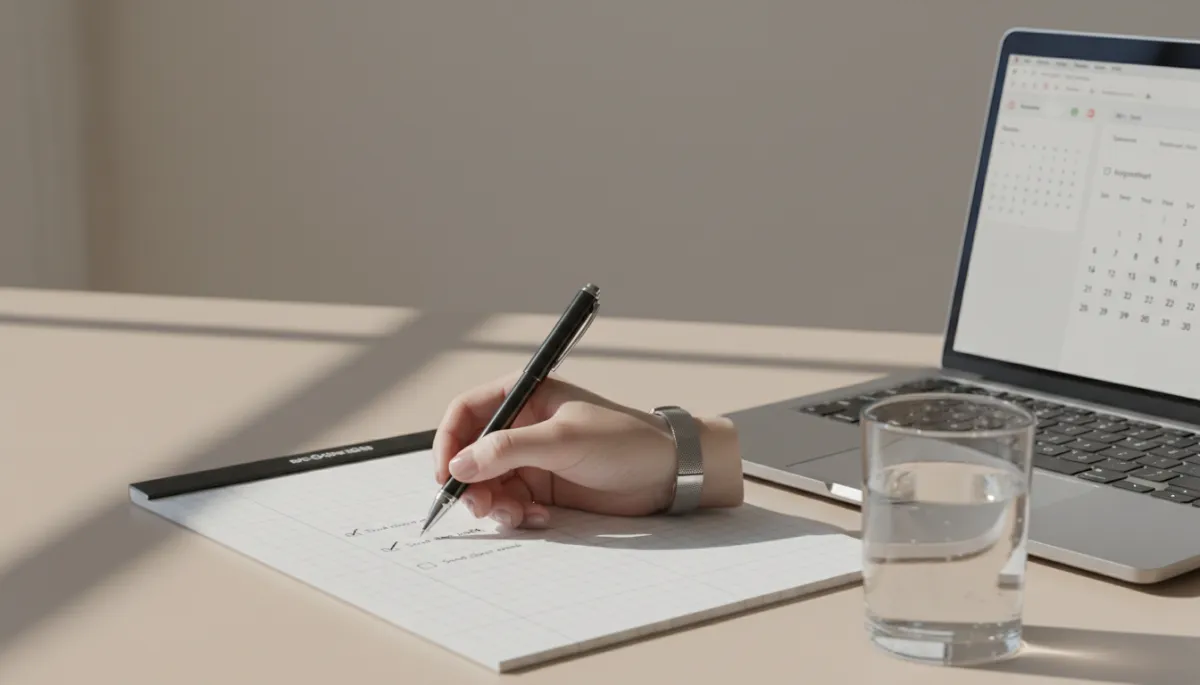
Small, visible wins train your brain to associate action with relief and progress.
Action Over Analysis: Why Thinking More Won’t Save You
When you feel overwhelmed, your instinct is often to think harder: restructure your task list, re‑estimate timelines, replay scenarios. Planning has its place, but there’s a tipping point where planning becomes avoidance. You are still expending energy—just not in a way that moves anything forward.
The truth is uncomfortable but liberating: you cannot think your way out of overwhelm; you must act your way out. Clarity is a result of taking steps, not a prerequisite for taking them. Waiting to “feel ready” or to “have it all figured out” keeps you stuck exactly where you are.
💡 Pro Tip: The moment you notice you’re looping in your head—rewriting the same mental to‑do list—pause and ask, “What is one microburst I can do in the next two minutes?”
How to Implement Microbursts in Your Day
Turning microbursts into a reliable tool requires a simple structure. You don’t need an elaborate system—just a few clear steps that you can repeat whenever overwhelm starts to creep in.
Step 1: Notice the Signs of Overwhelm Early
For many professionals, overwhelm shows up as:
Jumping between tabs and tasks without finishing any of them
Rereading the same email or document without absorbing it
Feeling a heavy, vague dread about “everything you have to do”
Procrastinating with low‑value tasks like inbox refreshing or chat scrolling
When you notice these patterns, treat them as a signal: it’s time for a microburst, not more mental spinning.
Step 2: Shrink the Task Until It Feels Almost Ridiculous
Identify the task that’s weighing on you, then ask: What is the smallest meaningful piece of this I can do right now? If your brain still resists, shrink it again. The goal is to make the step so manageable that you can’t help but think, “I can at least do that.”
Big task: “Write the client proposal.”
Microburst: Open the document and write the subject line or the first bullet point of the executive summary.Big task: “Get on top of my health.”
Microburst: Drink one glass of water right now.Big task: “Catch up on all these emails.”
Microburst: Reply to one email that will take less than two minutes.
Step 3: Time‑Box Your Microburst
Give your microburst a clear time boundary—usually between 30 seconds and five minutes. This protects you from feeling like you’re committing your entire afternoon and makes starting even easier. You might say:
“For the next two minutes, I’ll write anything that comes to mind for this report.”
“For 60 seconds, I’ll stand up, stretch, and drink water.”
“For three minutes, I’ll clean up just the top section of this spreadsheet.”
Step 4: Do It Immediately—No Negotiation
Once you’ve defined the microburst, act on it right away. No extra planning. No “I’ll start after this one more thing.” The whole point is to outrun your overthinking. Count down—“3, 2, 1, go”—and move. You’re training yourself to respond to overwhelm with action, not more thought.
Step 5: Decide—Stop, or Stack Another Microburst
When your time is up or the tiny action is complete, pause. You have two equally valid options:
Stop and acknowledge the win. You did what you said you would do. That alone weakens the grip of overwhelm and strengthens your self‑trust.
Stack another microburst. If you feel a bit more energized or clear, define the next tiny step and repeat. Often, momentum naturally turns one microburst into several.
The power here is choice. You’re no longer at the mercy of an overwhelming task list; you’re in motion, one deliberate step at a time.
Everyday Microburst Examples You Can Use Immediately
Microbursts for Physical Reset: Drink Water and Move
Overwhelm is amplified when your body is depleted. Simple physical microbursts can reset your system and give you the capacity to think clearly again:
Drink one glass of water. Not “drink more water today.” Stand up, fill a glass, and drink it. This tiny act improves hydration, breaks your posture, and gives your mind a brief reset.
Do ten seconds of stretching. Reach up, roll your shoulders, or walk to the end of the hallway and back. You’ll return to your desk with slightly more oxygen and a calmer nervous system.
Microbursts for Deep Work: Write One Sentence
For cognitively heavy tasks—reports, strategies, slide decks—the blank page can be paralyzing. Use microbursts to crack it open:
Write one sentence. It can be messy, incomplete, or even wrong. Once there’s something on the page, your brain has something to work with. Often that one sentence becomes a paragraph before your timer goes off.
Brain‑dump bullet points for two minutes. Set a timer, and list every idea, concern, or question related to the task. Don’t organize—just unload. When the timer ends, you’ll have a starting map instead of a swirling cloud in your head.
Microbursts for Communication: One Message at a Time
Communication backlogs are a common source of professional stress. Instead of “catch up on everything,” use microbursts:
Reply to one quick email. Choose the one you can answer in under two minutes. Hit send. That small completion breaks the feeling of being buried.
Send one clarifying message. If a project feels stuck, draft a single question to a stakeholder: “What would success look like for you on this?” One message can unlock days of uncertainty.
Building a Microburst Habit: From Occasional Tool to Daily Practice
Using microbursts once in a crisis is helpful. Turning them into a default response to overwhelm is transformative. Here’s how to embed them into your professional routine.
Create Microburst “Prompts” in Your Environment
Visual cues can remind you to shift from thinking to action. For example:
A sticky note on your monitor that says, “What’s the microburst?”
A recurring calendar reminder titled “2‑minute microburst” mid‑morning and mid‑afternoon
A water bottle on your desk as a cue for a hydration microburst
Pair Microbursts with Existing Routines
Habits stick more easily when they’re attached to something you already do. For instance:
After every meeting, spend two minutes capturing next steps or sending one follow‑up message.
Before you open your inbox each morning, write one sentence on your most important project.
Every time you refill your coffee, drink a glass of water as a microburst for your energy.
Track Microbursts, Not Just Big Wins
Professionals often only celebrate major milestones—a completed project, a promotion, a big client win. To reinforce the microburst mindset, start tracking small actions too. You might:
Keep a simple note titled “Today’s microbursts” and list each one you complete.
Use a habit‑tracking app to log “1 sentence written” or “1 glass of water” as daily streaks.
Over time, this record becomes evidence: you are someone who takes action, even when things feel heavy. That identity shift is powerful fuel against future overwhelm.
From Overwhelmed to In Motion: A New Default Response
Overwhelm won’t disappear from professional life. Deadlines, demands, and complex problems are part of doing meaningful work. What can change is your response. Instead of freezing, spiraling in thought, or numbing out with busyness, you can train yourself to respond with one simple question: “What is the smallest action I can take right now?”
Microbursts are not about lowering your standards or ignoring big goals. They are about respecting how human brains actually work under pressure and designing your actions accordingly. By taking small, manageable steps, you:
Break through the paralysis of overwhelm
Build momentum instead of waiting for motivation
Gain clarity through doing, not just thinking
Strengthen your identity as someone who moves things forward
The next time your workload feels impossible, don’t wait for a perfect plan or a burst of inspiration. Stand up and drink a glass of water. Open the document and write one sentence. Send one clarifying message. Let those microbursts be the bridge between where you are and where you need to go.
📌 Final Thought: Overwhelm is a feeling, not a fact. Small, consistent actions—microbursts—are how you prove to yourself, moment by moment, that you are capable of more than your fear suggests.
