Overcome Fear: Embrace Courage and Growth
Personal Growth, Emotional Resilience, Facing Fear
Fear Is the Mind-Killer: How to Face Fear and Keep Moving Forward
Fear can feel like a solid wall between you and the life you want. Yet fear itself is not the enemy—it’s what we do when we feel afraid that matters. When we learn to let fear pass through us instead of letting it stop us, we discover a quieter courage and a deeper freedom to live fully.
“Fear Is the Mind-Killer”: What This Really Means
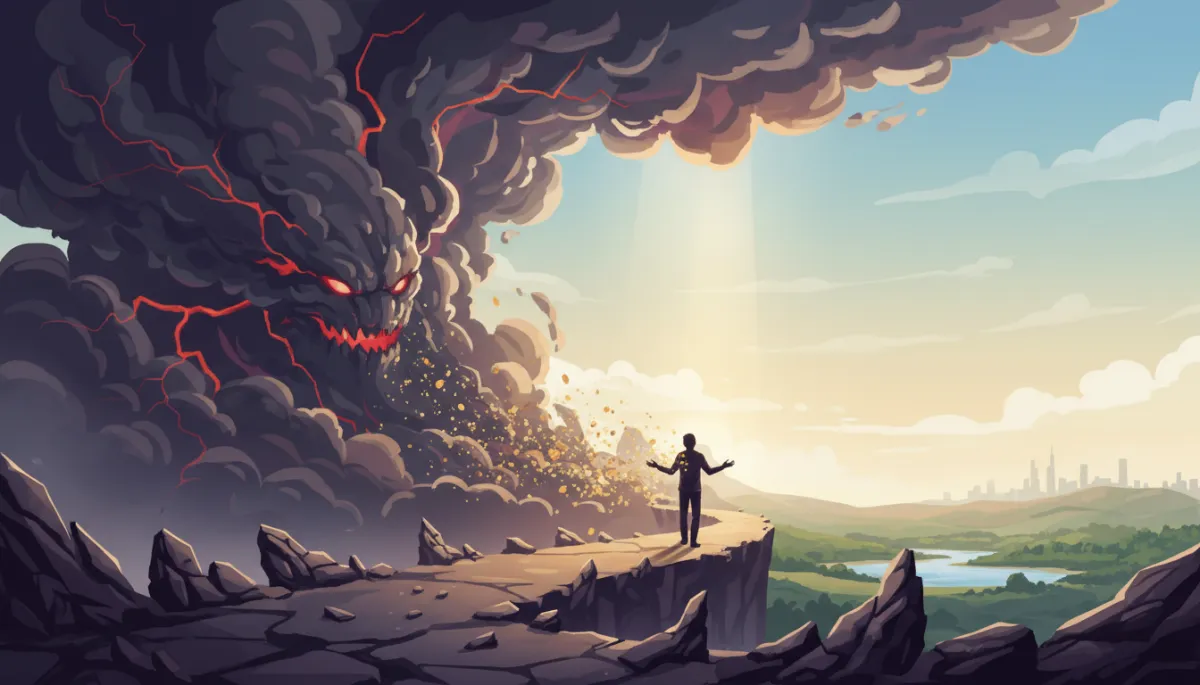
In Frank Herbert’s Dune, there is a short, powerful line that has resonated with readers for decades: “Fear is the mind-killer.” It is part of a longer litany against fear, repeated by characters in moments of intense danger. The phrase is simple, but it captures something profound about how fear works in our lives.
Fear doesn’t just make your heart race or your palms sweat. It narrows your attention, clouds your thinking, and convinces you that the worst possible outcome is the only one that matters. It “kills” the mind by shutting down your ability to see options, to think clearly, and to act in alignment with your values instead of your panic. When fear takes over, you stop choosing; you simply react—or you freeze.
How Fear Becomes a Roadblock in Everyday Life
Most of the time, fear doesn’t show up as a dramatic, life-or-death moment. It appears quietly, in everyday situations, and erects invisible barriers between you and what matters. Think about how many times fear has stood in your way:
You don’t apply for the job you want because you’re afraid of being rejected or “not ready yet.”
You avoid an honest conversation with someone you love because you fear conflict, disappointment, or loss.
You stay in a familiar but unfulfilling routine because the unknown feels too risky, even if it might be better.
In each of these examples, fear is not physically stopping you. There is no locked door, no chain, no guard. The roadblock is internal: a feeling that rises up, tells a convincing story about danger, and urges you to retreat. Over time, if you obey that feeling again and again, your life shrinks. You move less, risk less, and dream less. The world seems smaller, but what has really changed is your willingness to move through fear.
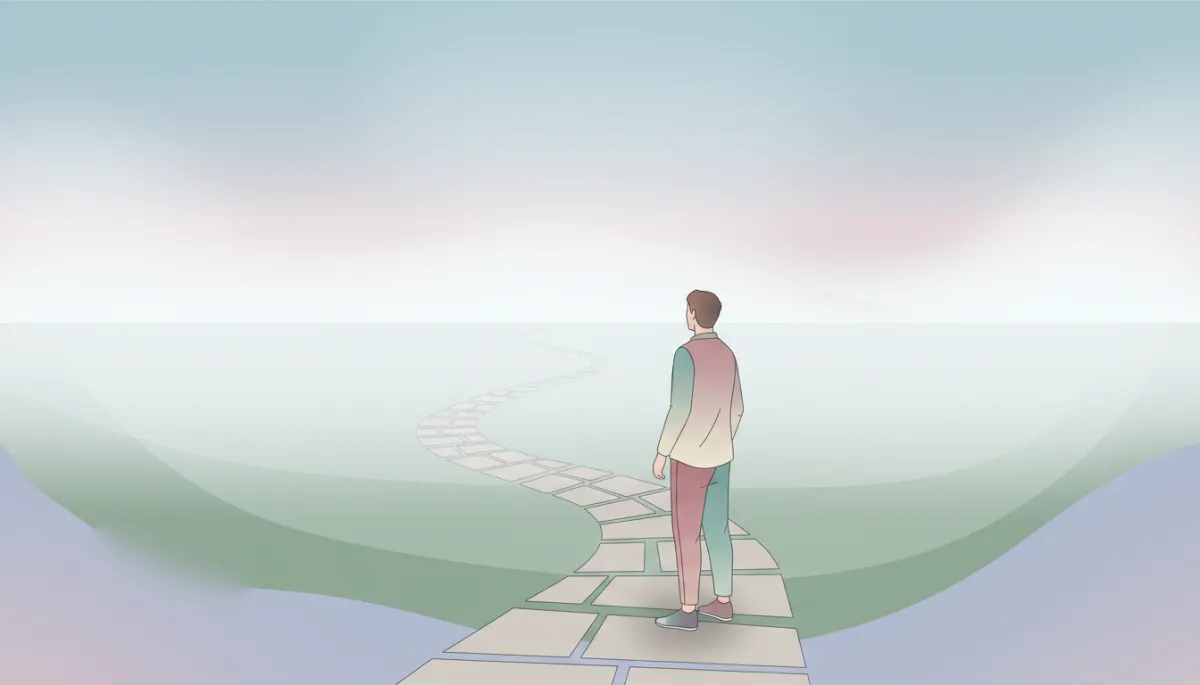
Fear often hides the path ahead, but each step taken reveals more than standing still ever will.
Fear Is Not the Problem—Our Response to It Is
It’s easy to believe that the goal is to “get rid of fear” or to become “fearless.” But fear, at its core, is simply a survival signal. It evolved to keep us safe, to alert us to potential threats. The problem is not that fear shows up; it’s that we often hand over control the moment it does. We treat fear as a command instead of a piece of information.
Notice the difference: “I feel afraid, so I must stop” versus “I feel afraid, so I will pause, assess, and then choose.” In the first case, fear is the driver; in the second, fear is a passenger you’re willing to listen to without giving it the steering wheel. The sensation of fear is not the real roadblock. The roadblock is the automatic decision to obey it without question.
When you begin to see fear as a message instead of a master, your relationship with it changes. You can acknowledge, “Yes, I’m scared,” without making that the end of the story. Fear becomes one voice among many in your inner world, not the only one that gets to speak.
Letting Fear Pass Over and Through You
The full litany from Dune includes another powerful idea: that the way to face fear is to let it pass over and through you. This might sound poetic, but it’s also practical. Emotions are not permanent structures; they are waves. They rise, crest, and fall. When we resist them—tightening up, fighting, or pushing them away—they tend to last longer and feel more intense. When we allow them to move through us, they complete their natural cycle.
To let fear pass through you means:
You notice it in your body—the tight chest, the racing heart, the knot in your stomach—without immediately trying to escape it.
You allow the feeling to be there, like a wave washing over you, knowing it will not stay at full strength forever.
You remain anchored in something deeper—your values, your intentions, your breath—while the wave moves through.
This is not about enjoying fear or pretending it feels good. It’s about staying present enough to remember that you are larger than any single feeling. You are the space it moves through, not the feeling itself. In that space, you still have the power to choose your next step.
💡 Pro Tip: When fear rises, silently repeat to yourself, “This is a feeling in my body. It will pass. I can still choose what I do next.”
Step 1: Acknowledge Your Fear Without Judgment
The first practical step in facing fear is simply to acknowledge it. That might sound obvious, but many of us are in the habit of denying, minimizing, or disguising our fear as something else—anger, procrastination, “logic,” or busyness. We tell ourselves, “I’m just being realistic,” when in truth we’re scared to take a risk. We say, “Now isn’t the right time,” when what we really mean is, “I don’t feel ready, and that frightens me.”
Try this instead: name the fear directly. You might say to yourself:
“I’m afraid of failing this exam.”
“I’m scared they’ll reject me if I’m honest.”
“I feel terrified at the thought of changing careers.”
Saying it out loud (or writing it down) doesn’t make the fear stronger; it makes it clearer. And clarity is power. When you know what you’re actually afraid of, you can respond more wisely instead of being pushed around by a vague sense of dread. Acknowledgment is a way of turning toward yourself with honesty and compassion, rather than turning away from your own inner experience.
Step 2: Breathe Deeply to Calm Your Body’s Alarm System
Fear is not just a thought; it’s a full-body experience. Your heart rate increases, your muscles tense, and your breathing becomes shallow. This is your nervous system doing its job, preparing you to fight, flee, or freeze. But in modern life, many of the situations that scare us—speaking in public, having a difficult conversation, making a big decision—are not physical emergencies. Your body’s alarm can be louder than the actual danger.
One of the simplest and most powerful tools you have is your breath. Deep, slow breathing sends a signal to your nervous system that you are safe enough to relax. This doesn’t erase the fear, but it lowers the volume so you can think more clearly. Try this basic practice the next time you feel fear rising:
Gently place a hand on your chest or your belly to feel your breath.
Inhale slowly through your nose for a count of four, letting your lungs expand.
Hold that breath gently for a count of two—no straining, just a pause.
Exhale slowly through your mouth for a count of six, feeling your body soften as you breathe out.
Repeat this for a few rounds. As you do, you might silently say, “Inhale—here I am. Exhale—I can be with this.” You are not trying to eliminate the feeling, only to create enough calm that you can respond to it with intention instead of panic. Your breath becomes an anchor in the middle of the wave.
💡 Pro Tip: Practice deep breathing when you’re not afraid as well. The more familiar it feels, the easier it will be to use when fear hits hard.
Step 3: Consciously Choose to Move Forward Despite Fear
Once you’ve acknowledged your fear and given your body a chance to settle, you arrive at a crucial moment: the moment of choice. This is where “fear is the mind-killer” can either become your reality or remain just a quote from a book. The question in front of you is simple but powerful: “Given that I feel afraid, what do I want to do next?”
Courage is not the absence of fear; it is the willingness to act in alignment with your values even while fear is present. You might still feel a knot in your stomach as you send the email, make the phone call, or step onto the stage. The goal is not to feel perfectly calm. The goal is to move your feet in the direction of what matters , even if your heart is pounding.
To support yourself in this, you can ask:
“What small step can I take right now, even if I’m scared?”
“If I imagine my future self looking back, what would they hope I chose today?”
“Is this fear protecting me from real danger, or just from discomfort and uncertainty?”
Often, the most life-giving choice is the one that feels scary and true at the same time. You don’t have to leap; you can take one grounded step. Then another. Each time you do, you teach your nervous system a new lesson: “I can feel fear and still move forward.” Over time, this becomes a quiet, steady confidence that no inspirational quote can replace.
Every Feeling Has a Beginning and an End
One of the reasons fear feels so overwhelming is that, in the moment, it can seem endless. Your mind whispers, “I’ll feel like this forever,” even though that has never actually been true. Every feeling—fear, joy, anger, grief—has a beginning, a middle, and an end. It rises, it moves through, and it fades. Sometimes it returns in waves, but no single wave lasts forever.
Remembering this is a form of inner kindness. When you’re in the middle of fear, you can say to yourself, “This is a moment in time, not the whole story of my life.” That perspective gives you room to breathe, to wait out the peak of the feeling without making drastic decisions based on it. You don’t have to collapse your entire future into how you feel right now.
As you allow fear to run its course without letting it dictate your actions, something important happens: you discover that on the other side of the feeling, you are still here. You are still capable of choosing, of loving, of creating, of trying again. The fear passes; your deeper self remains. This is what it means to be free to live fully—not that you never feel afraid, but that fear no longer decides the size of your life.
Living Fully on the Other Side of Fear
When you practice acknowledging fear, breathing through it, and choosing to move forward anyway, you gradually reclaim parts of your life that fear had been quietly controlling. You start having conversations you once avoided. You take chances on opportunities that used to feel out of reach. You allow yourself to be seen more fully, flaws and all, because you’re no longer letting the fear of judgment silence you as quickly as it once did.
This doesn’t turn you into a reckless person. If anything, it makes you more grounded. You still listen to fear when it signals real danger. But you stop confusing “this feels scary” with “this must be wrong.” You allow your values, not your anxieties, to set your direction. And that shift can change everything—from the work you pursue, to the relationships you nurture, to the way you talk to yourself when no one else is listening.
📌 Key Takeaway: Freedom is not the absence of fear; it is the ability to feel fear, let it pass through, and still choose a life that matters to you.
A Simple Practice You Can Start Today
To bring all of this together, here is a brief practice you can use the next time fear appears—or even as a daily ritual to build resilience:
Pause and notice. When you feel fear, stop for a moment. Notice where you feel it in your body. Simply say, “Fear is here.”
Name it. Put words to it: “I’m afraid of…” Fill in the blank honestly, without judging yourself for feeling that way.
Breathe. Take a few slow, deep breaths. Inhale for four, hold for two, exhale for six. Let your body know it is safe enough to soften, even slightly.
Remember the wave. Remind yourself, “Every feeling has a beginning and an end. This will pass.” Feel the truth of that, even if only a little.
Choose one step. Ask, “Given that fear is here, what is one small action that aligns with the life I want?” Then take that step, even if your voice shakes or your hands tremble.
Over time, this simple sequence—acknowledge, breathe, remember, choose—can reshape your relationship with fear. You become someone who does not wait for fear to disappear before living, but who lives fully while fear comes and goes like the weather.
Stepping Into Your Life, One Brave Moment at a Time
“Fear is the mind-killer” is more than a dramatic line from a novel; it’s a reminder of what is at stake when we let fear make our choices for us. Each time you allow fear to stop you, a small piece of your possible life goes unexplored. Each time you allow fear to pass through you while you keep moving, you reclaim a little more of your freedom, your courage, and your capacity to live with an open heart.
You do not have to transform your entire life overnight. You only have to meet the next moment of fear with a bit more awareness, a bit more breath, and a bit more willingness to move forward anyway. One brave conversation. One honest decision. One step onto a path that feels uncertain but true. This is how a life changes—not in a single act of heroism, but in a series of quiet choices to keep going, even when you’re afraid.
Fear will still visit you. It is part of being human. But it does not have to be your jailer. When you let it pass over and through you, when you remember that every feeling has a beginning and an end, you step into a different kind of life—one where your mind is clear enough, and your heart steady enough, to choose what truly matters to you.
