Mastering Workplace Drama: Essential Skills for Leaders
Leadership, Emotional Intelligence, Workplace Culture
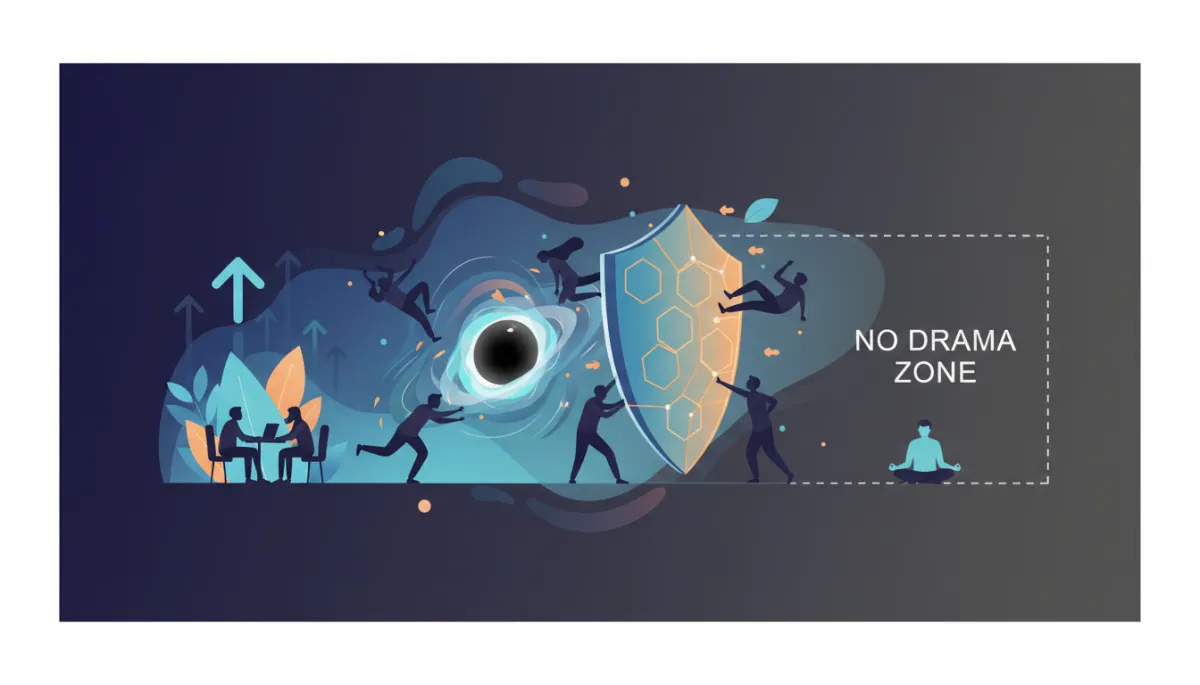
Drama Is Everywhere: How Professionals Stay Out of the Black Hole
Drama is all around us. You cannot eliminate it, but you can prevent it from hijacking your focus, credibility, and results. In a world that feeds on public conflict and outrage, learning to manage drama is now a core professional skill, not a “nice to have.”
Why Drama Is So Tempting — And So Costly
Office drama offers instant gratification. It makes us feel included, “in-the-know,” and momentarily important. Yet the cost is steep: lost time, eroded trust, damaged reputations, and stalled careers. Teams that normalize gossip, blame, and emotional outbursts spend more energy on internal battles than on serving clients or hitting strategic goals.
Professionals who rise above drama are not cold or detached. Instead, they are deliberate. They recognize that while conflict and emotion are inevitable, dramatizing them is optional. They build habits and environments that keep issues in perspective and move conversations toward solutions rather than spirals.
1. Create a Clear “No Drama Zone”
A “No Drama Zone” is less about a physical space and more about a set of behavioral standards. It is a deliberate decision that in your presence—whether in your office, on your team, or in your calendar—certain behaviors are simply not welcome: gossip, character attacks, public make-wrongs, and emotional escalation without a willingness to solve the problem.
Define what “drama” means for you and your team. For example: talking about people instead of issues, rehashing the same story without action, or raising the emotional volume instead of the quality of thinking.
Communicate your standard. You might say, “I’m happy to discuss concerns, but I don’t participate in gossip. Let’s focus on what we can actually change.”
Offer a constructive alternative. Redirect conversations toward facts, impacts, and next steps: “What specifically happened?” “How is it affecting the work?” “What options do we have?”
💡 Pro Tip: A No Drama Zone is not about silencing emotion. It is about channeling emotion into responsible, solution-focused conversations.
2. Refuse to Be Dramatic Yourself
The fastest way to reduce drama around you is to stop generating it. That means examining your own habits: exaggeration, venting without intention, catastrophizing minor setbacks, or telling stories that make others wrong and you right. Colleagues quickly notice whether you pour water or gasoline on tense situations.
Before you speak or hit “send,” pause and ask:
Is this factual or embellished? Am I describing what happened, or am I adding labels, assumptions, and motives?
Is this helpful or just emotionally satisfying? Will sharing this move us toward a solution, or does it only help me feel justified or superior?
Am I reacting or responding? A reaction is immediate and emotional; a response is thoughtful and aligned with your long-term reputation.
When you model calm, grounded behavior—especially under pressure—you send a powerful signal about what “professional” means in your environment. Over time, peers will come to you for clarity and perspective rather than spectacle.

Composed leaders de-escalate tense moments and set the tone for the entire team.
3. Set Personal Boundaries with Specific People
Every workplace has “frequent flyers” of drama—colleagues who consistently stir the pot, seek allies for their grievances, or turn every issue into a personal saga. You may not be able to change them, but you can set clear, respectful boundaries around your own time and emotional energy.
Limit access. Shorten unstructured conversations, avoid being the default “sounding board,” and redirect to formal channels (for example, “This sounds like something to raise with our manager.”)
Use boundary phrases. Calm statements such as “I’m not comfortable discussing this without them present,” or “I’d rather focus on what we can do next,” signal your limits without attacking the person.
Protect your focus windows. Block “deep work” time on your calendar and treat it as non-negotiable, reducing opportunities for spontaneous drama to consume your day.
📌 Key Takeaway: Boundaries are not punishments; they are agreements about how you will participate. They protect your best work and your best self.
4. Invite Others to Call Out Your Own Drama
Even the most self-aware professionals have blind spots. Under stress, you may slip into defensiveness, blame, or storytelling without realizing it. One of the most powerful moves you can make is to explicitly invite feedback on your own tendencies toward drama.
With trusted colleagues or your team, you might say:
“If you ever notice me making things bigger than they are, please flag it for me. I want to stay grounded in facts and solutions.”
“When I start venting, you have permission to ask, ‘What outcome do you want here?’ It helps me shift from complaining to problem-solving.”
Then, when someone does hold up the mirror, thank them. Your response will determine whether they ever try again. Over time, this mutual accountability creates a culture where drama is noticed early and redirected before it becomes contagious.
💡 Pro Tip: Agree on a neutral cue word or phrase—such as “story mode” or “drama alert”—to gently signal when anyone, including you, is slipping into unproductive territory.
5. Surround Yourself with Growth-Minded Individuals
Drama thrives in environments where people feel powerless, underappreciated, or stuck. In contrast, growth-minded professionals view challenges as opportunities to learn, not as occasions for blame or spectacle. They ask, “What can we improve?” instead of “Who is at fault?”
Seek out colleagues who are curious, accountable, and future-focused. Notice who talks about ideas and solutions more than about people and problems.
Join professional networks, peer groups, or mentoring circles that emphasize reflection, feedback, and development rather than shared complaining about “them” or “management.”
In your own conversations, model growth questions: “What did we learn?” “What will we do differently next time?” “How can I support you in moving this forward?”
The more time you spend with people who orient toward learning and responsibility, the less appealing drama becomes. It starts to feel like a distraction from more meaningful, energizing work.
Turning Down the Volume Without Turning Off Your Humanity
Managing drama is not about becoming robotic or indifferent. It is about choosing response over reactivity. You still acknowledge frustration, disappointment, or anger—but you refuse to let those emotions drive the agenda. Instead, you use them as data: signals that something needs attention, clarification, or change.
In practice, this might look like:
Taking a brief pause before responding to a provocative email, so your reply reflects your values, not your first impulse.
Acknowledging a colleague’s feelings (“I can see this is frustrating”) while steering toward action (“What outcome do you want, and how can we work toward it?”).
Choosing to address issues directly with the person involved instead of building a case in the court of public opinion.
Bringing It All Together: Your Personal Anti-Drama Strategy
Drama will always be part of the human experience, especially in fast-paced professional environments. You cannot control every comment, reaction, or conflict around you. You can, however, design how you participate:
Declare your No Drama Zone and consistently redirect conversations toward facts and solutions.
Monitor your own behavior so you are not the one amplifying issues or fueling gossip, even unintentionally.
Set firm, respectful boundaries with people who repeatedly attempt to pull you into their drama cycles.
Invite accountability by asking trusted colleagues to flag your own lapses into dramatization or unproductive venting.
Invest in growth-minded relationships that normalize learning, accountability, and constructive disagreement instead of theatrical conflict.
When you practice these strategies consistently, you become a steadying presence in any room. You are no longer at the mercy of the latest flare-up or rumor. Instead, you are known as the person who listens carefully, speaks thoughtfully, and keeps the work—and the people doing it—moving forward. In a culture that often rewards noise, that kind of grounded professionalism stands out more than ever.
