Why Some Local Businesses Thrive in Recession
Local Business, Economic Recession, Bankruptcy, Strategy
When Recession Knocks: Why Some Local Businesses Fail—and Others Come Out Stronger
Economic recessions raise the temperature on every local business. Bankruptcy filings rise, margins shrink, and owners feel squeezed from all sides. Yet history shows that downturns don’t just destroy businesses—they also reveal which companies are prepared to adapt, innovate, and ultimately grow stronger.
Recessions and Rising Bankruptcy Rates: The Reality Check for Local Businesses
Across the United States, financial stress is clearly building. For the 12 months ending March 31, 2026, total bankruptcy filings climbed to 591,850, an 11.9% increase over the previous year, according to the U.S. Courts. Business filings alone rose to 25,960, up 11.4% year over year (uscourts.gov).
That national trend is mirrored locally. In Milwaukee County, there were 3,524 bankruptcy filings in the 12 months ending March 31, 2026, spanning Chapter 7 liquidations, Chapter 11 reorganizations, and Chapter 13 adjustments (uscourts.gov). The Business Journal of Milwaukee has highlighted this uptick, noting a visible rise in distress among both small and mid-sized firms as higher interest rates, slower consumer spending, and rising costs collide.
On the surface, it’s easy to blame the economy alone. But when you look closer at which businesses are failing—and which are quietly gaining market share—a different story emerges. The difference isn’t just the recession itself; it’s how owners respond to it.
The Hidden Culprits: Lack of Innovation and Unwillingness to Grow
Many local businesses don’t file for bankruptcy because the recession made their model impossible. They file because the recession exposed how fragile—and outdated—that model already was. Two patterns show up again and again in struggling companies: stagnant offerings and an unwillingness to grow or adapt.
They sell the same products or services in the same way, long after customer expectations have changed.
They rely on one or two big clients instead of building a diversified base.
They treat technology, data, and process improvements as “nice to have,” not essential.
In good times, these weaknesses stay hidden. Sales roll in, banks are flexible, and owners can “get by” without rethinking much. In a downturn, however, the market becomes brutally honest. Customers become more selective, lenders more cautious, and competitors more aggressive. Businesses that have been coasting suddenly find themselves without the cash flow, customer loyalty, or operational efficiency to survive.
📌 Key Takeaway: Recessions don’t create bad business models—they expose them. The companies most at risk are often those that resisted innovation when times were good.
Rethinking Recession: Your Tough but Savvy Business Partner
What if you stopped seeing recession as a villain—and instead treated it like a demanding, no-nonsense business partner? This “partner” doesn’t care about how things have always been done. It insists on:
Responsibility – knowing your numbers, understanding your risks, and facing reality early instead of waiting until cash runs out.
Innovation – updating your offerings, how you deliver them, and how you reach customers.
Strategic expansion – not reckless growth, but smart moves into new niches, partnerships, or revenue streams that make your business more resilient.
Downturns also change the playing field. Competitors that were once untouchable may pull back on marketing, freeze hiring, or close locations. Landlords become more open to negotiation. Vendors offer better terms to keep your business. If you are prepared, a recession can become the moment you:
Capture market share from weaker competitors.
Attract top talent that suddenly becomes available.
Lock in better leases, contracts, and supplier deals that pay off for years.

Businesses that plan proactively in downturns often emerge with stronger market positions.
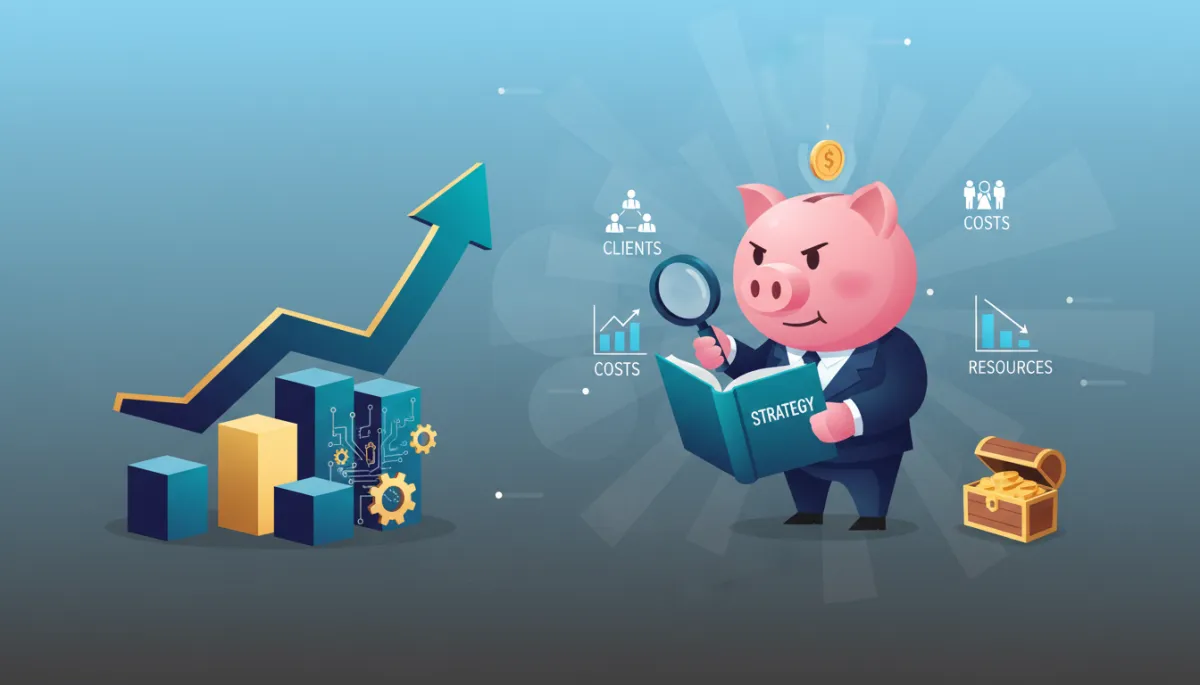
Strategy #1: Make Client Retention Your First Line of Defense
In a recession, acquiring new customers becomes more expensive and less predictable. That makes your existing clients your most valuable asset. Yet many local businesses still treat retention as an afterthought, focusing on short-term sales instead of long-term relationships.
Deepen communication. Don’t disappear when times get tough. Check in with key clients, ask how their needs are changing, and look for ways to adjust your services accordingly.
Create retention offers. Offer loyalty pricing, value-added bundles, or extended support to make it easy for clients to stay with you instead of shopping around.
Map your client risk. Identify which accounts are most at risk of cutting back and proactively design solutions that help them save money without leaving you.
💡 Pro Tip: It is almost always cheaper to keep an existing client than to win a new one. In a recession, that cost gap widens even more.
Strategy #2: Cut Costs Intelligently—Not Blindly
When revenue softens, the instinct is to slash expenses across the board. But indiscriminate cutting can damage the very capabilities you need to survive. The goal is cost reduction with precision—trimming fat while protecting the muscle of your business.
Audit your spending. Separate costs into three categories: essential to operations, essential to growth, and non-essential. Cut aggressively from the third category first.
Renegotiate, don’t just remove. Talk to landlords, suppliers, and service providers. Many would rather adjust terms than lose a reliable customer, especially in a weakening economy.
Invest in efficiency tools. Sometimes a modest investment in software, automation, or process redesign can free up staff time, reduce errors, and cut recurring costs far more than simple layoffs.
National surveys of business leaders in 2026 show that resilient companies are focusing on liquidity, cost agility, and scenario-based planning—protecting their core strengths while trimming what no longer adds value (Dawgen Global). Local businesses can apply the same mindset on a smaller scale.
Strategy #3: Leverage Resources Wisely to Boost Profitability
Profitability in a recession isn’t just about cutting—it’s about re-deploying what you already have. That includes your people, your space, your data, and your relationships in the community.
Repackage your expertise. Could your team’s skills be offered as consulting, training, or subscription services instead of only one-off projects or retail sales?
Use technology to do more with less. From basic automation tools to AI-powered scheduling, marketing, or inventory systems, smart tech can help you serve more clients without adding headcount. Nationally, more than half of middle-market firms plan to use technology and AI to streamline operations and support growth even in uncertain times (JPMorgan Business Leaders Outlook 2026).
Partner instead of going it alone. Team up with complementary local businesses to share marketing costs, cross-refer customers, co-host events, or bundle services in ways that create more value at a lower cost.
Building a Stronger Foundation—Now, Not “Someday”
The rise in bankruptcy filings—nationally and here in Milwaukee—is a warning sign. But it is not a verdict on your business. It is a signal to act. Companies that survive and thrive through recessions tend to have a few things in common:
They face their numbers early, not when the bank calls.
They innovate in how they serve customers, not just what they sell.
They treat recessions as a time to refine, streamline, and strategically expand—not simply to shrink.
Think of this period as a demanding mentor standing over your shoulder, asking hard questions: Are you really using your resources wisely? Are you staying close enough to your clients? Are you building a business that can withstand not just this downturn, but the next one too?
For local businesses willing to innovate and grow—even cautiously—recessions can become inflection points. While others retreat or close their doors, you can be the company that steps forward, strengthens relationships, sharpens operations, and quietly builds a foundation for the next decade of growth.
The economy will always cycle. The real question is whether your business will cycle with it—or rise above it by treating each downturn not as a threat, but as a powerful, if demanding, partner in long-term success.
