
The Importance of Community in Human Life
Community, Human Connection, Personal Growth
Why We Need Each Other: The Deep Importance of Community in Human Life
We are born wired for connection, yet many of us live as if we are safer alone. This tension between our longing for community and our instinct to protect ourselves shapes almost every part of modern life. Understanding it — and learning to choose connection over separation — is one of the most powerful ways to create a happier, more meaningful life.
Our Natural Inclination Toward Generosity, Love, and Kindness
Strip away the noise of daily life, and humans are remarkably generous creatures. From infancy, we are drawn toward faces, voices, and touch. We smile before we speak, reach out before we reason, and cry not just from hunger but from loneliness. At our core, we are built to give and receive care.
Modern psychology and neuroscience support what ancient wisdom traditions have always taught: love, kindness, and cooperation are not weaknesses — they are survival strategies. Our brains reward us with feel-good chemicals when we help others, share, or experience genuine connection. Acts of generosity activate the same reward centers as food and pleasure. Compassion literally feels good because we were designed to live interdependently, not in isolation.
You can probably recall moments when you offered help without thinking: holding a door, checking on a friend, donating to someone in need. These impulses arise quickly and naturally. They are expressions of a deeper truth: we recognize ourselves in each other. When someone else suffers, a part of us feels it too. Community is the structure that allows this natural generosity to flow, multiply, and become a way of life rather than a series of isolated moments.
Why We Choose Protection and Separation Instead
If connection is so natural, why do so many of us retreat behind emotional walls, busy schedules, and digital distractions? The answer lies in another powerful human instinct: self-protection. We have learned, often through painful experience, that opening up can lead to rejection, disappointment, or betrayal. So we armor up. We keep conversations shallow, relationships convenient, and our true selves carefully hidden.
Protection and separation can feel like safety. We tell ourselves that if we rely only on ourselves, no one can let us down. Yet this strategy comes at a steep cost. The same walls that keep out potential hurt also keep out the depth of love, support, and belonging we crave. We end up living in smaller emotional worlds, surrounded by people yet profoundly alone.
💡 Pro Tip: Notice where “I’m fine” is your automatic answer. It may be a sign that protection, not genuine connection, is running the show.
Choosing community means choosing a different path: one where we accept some level of vulnerability because the rewards of real connection are worth it. It asks us to soften our defenses, to be seen as we are, and to let others matter to us. That can be frightening — but it is also where life becomes richer, more textured, and more deeply human.
A Brief History: Community as Humanity’s Original Survival Strategy
Long before we had cities, nations, or digital networks, we had villages, clans, and tribes. For most of human history, belonging to a community was not optional — it was the difference between life and death. People hunted together, cooked together, raised children together, and protected one another from danger. Roles were shared, stories were passed down, and identity was rooted in the group as much as the individual.
Across cultures, we see countless expressions of this communal instinct:
In many African traditions, the philosophy of Ubuntu — “I am because we are” — emphasizes that a person’s humanity is tied to the humanity of others.
Indigenous communities worldwide have relied on shared land, collective decision-making, and communal rituals to sustain both physical survival and spiritual well-being.
Religious and spiritual traditions have long gathered people in temples, churches, mosques, and sacred spaces — not just to worship, but to eat, celebrate, grieve, and care for one another.
Even in more recent history, neighborhoods functioned as extended families. Doors were left unlocked, children roamed freely, and everyone knew who lived on their street. Community was woven into daily life, not squeezed into the margins of an already full calendar. While those times were far from perfect, they remind us that living closely with others is not an exception — it is our default setting.
How Community Fuels Personal Growth and Happiness
Community does more than surround us with people; it shapes who we become. When we are part of healthy, supportive groups, we are gently (and sometimes firmly) encouraged to grow. We see examples of courage, kindness, resilience, and creativity in others — and we begin to believe those qualities are possible for us too.
Think about the times you have taken a meaningful step in your life: starting a new habit, changing careers, healing from loss, or pursuing a dream. Chances are, you did not do it alone. You had someone cheering you on, offering feedback, holding you accountable, or simply standing beside you so you did not have to face the unknown by yourself. Community is a catalyst for growth because it gives us both support and gentle pressure to keep moving forward.
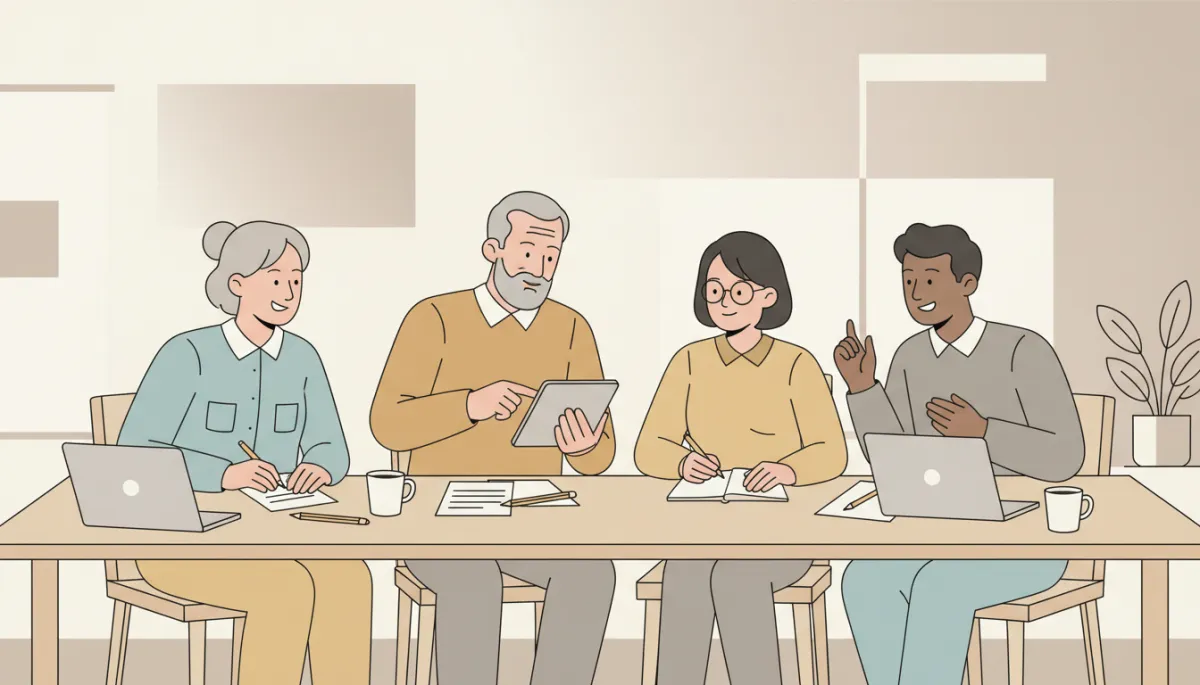
Shared goals and honest support help us grow further than solo effort alone.
Research on happiness consistently shows that strong relationships are one of the most reliable predictors of well-being. People with close-knit communities tend to live longer, handle stress better, and recover more quickly from setbacks. They report higher levels of life satisfaction and a deeper sense of meaning. Community gives us a place to be seen, to be known, and to be loved — not for what we achieve, but for who we are.
Individualism: The Modern Story That Keeps Us Apart
Despite all this, we live in a time when individualism is often celebrated above all else. We are told to “follow your dreams,” “build your brand,” and “look out for number one.” Success is measured in personal achievements, private wealth, and individual recognition. While there is nothing wrong with ambition or personal goals, this story can quietly convince us that needing others is a sign of weakness or failure.
Modern life also fragments our attention and time. Long commutes, remote work, social media, and constant busyness leave little space for slow, steady relationship-building. We may have hundreds of online “friends” but few people we can call at midnight when everything falls apart. The result is a strange paradox: we are more connected than ever, yet many of us feel more alone than ever.
📌 Key Takeaway: Individualism promises freedom, but without community, that freedom can quietly turn into loneliness and disconnection.
Reclaiming community is not about rejecting individuality; it is about remembering that our gifts, talents, and dreams are meant to be shared. Your individuality finds its fullest expression not in isolation, but in relationship — when you bring who you are to a group that values and amplifies it.
How Community Supports Our Values and Life Mission
Most of us hold certain values close to our hearts: compassion, integrity, creativity, faith, justice, family, or service. Yet living those values consistently can be challenging, especially when the world pulls us in other directions. This is where community becomes powerful: the right communities reinforce and protect what matters most to us.
A community can:
Remind you of your values when you are tempted to compromise them.
Offer wisdom and perspective when you face difficult decisions.
Celebrate with you when you take courageous steps toward your goals.
Hold you accountable when your actions drift away from what you say you believe.
If you have a sense of mission — whether it is raising a family with love, building an ethical business, serving your neighborhood, or creating art that moves people — community is the soil that mission grows in. Alone, you may burn out or lose direction. Together with others who share your values, your mission gains resilience and reach. Community turns private intentions into shared movements.
Connection, Belonging, and the Deep Experience of Fulfillment
Fulfillment is more than happiness. It is the quiet sense that your life matters, that you are part of something larger than yourself, and that who you are is welcomed in the world. Community plays a central role in this experience because it answers three fundamental human questions:
Do I belong somewhere?
Do I matter to anyone?
Can I contribute something meaningful?
In a healthy community, the answer to all three is a resounding yes. Community fosters connection by giving you people to share ordinary moments and extraordinary milestones with. It provides a place where your presence is noticed, your absence is felt, and your voice matters. Over time, this steady experience of being connected and significant contributes to a deep, enduring sense of fulfillment that no achievement or possession can replace.
“We don’t find ourselves by standing apart; we find ourselves in the mirrors of those who truly know us.”
Take Inventory: What Communities Are You Part Of Right Now?
To bring these ideas from theory into your own life, start with a simple exercise: inventory your current communities. We often move through our days without consciously noticing the groups that shape us. Taking stock can reveal both the richness you already have and the gaps you may want to fill.
Grab a notebook or open a blank document, and list the communities you are part of. Consider:
Family (immediate and extended)
Friends and social circles
Workplace or professional networks
Faith, spiritual, or philosophical communities
Hobby and interest groups (sports, arts, volunteering, learning)
Online communities where you regularly engage, not just scroll
💡 Pro Tip: A community is more than a contact list. Focus on groups where there is some level of shared purpose, mutual care, or ongoing interaction.
Evaluate: How Do You Source and Support Your Communities?
Once you have your list, take a closer look. Community is a two-way exchange: it sources you — offering energy, support, and inspiration — and you support it in return. Reflect on each community and ask yourself two sets of questions.
1. How does this community source me?
Do I feel more energized or more drained after spending time here?
Does this group support my values and life direction, or pull me away from them?
Can I be honest and authentic here, or do I feel pressure to perform?
2. How do I support this community?
Do I show up consistently, or only when it is convenient for me?
Do I listen, encourage, and contribute — or mostly receive?
Are there simple ways I could offer more kindness, time, or skills to strengthen this group?
📌 Key Takeaway: Healthy community is reciprocal. It is not about perfection, but about a steady flow of giving and receiving over time.
Consider: What New Communities Could Enhance Your Life Mission?
After you have inventoried and evaluated your current communities, you may notice areas of longing. Perhaps you crave deeper friendships, more spiritual grounding, creative collaboration, or a group that shares your passion for service or learning. These longings are not signs that you are failing; they are invitations. They point toward new communities that could support your life mission.
Consider asking yourself:
What do I care about so deeply that I want to share it with others?
Who is already doing the kind of work or living the kind of life I feel drawn toward?
Where could I show up regularly — in person or online — to connect with people on a similar path?
Joining a new community can feel intimidating, especially if you are used to going it alone. Start small. Attend one meeting, one class, one gathering. Introduce yourself to one person. Offer one genuine compliment or question. Community rarely forms overnight; it grows through repeated, simple, human moments of showing up and caring.
💡 Pro Tip: Look for communities where generosity, love, and kindness are visible in how people treat each other. Those are the places where your own best qualities will be welcomed and strengthened.
Choosing Community Over Separation, Again and Again
In the end, the importance of community in human life comes down to a series of choices. Every day, we are offered moments where we can retreat into protection and separation or lean gently toward connection. We can send the text, or stay silent. We can attend the gathering, or cancel. We can ask a deeper question, or keep the conversation on the surface. None of these choices are dramatic on their own, but together they shape the story of our lives.
You are naturally inclined toward generosity, love, and kindness. Those qualities are not naive; they are powerful. They are the building blocks of strong communities and meaningful lives. Modern society may encourage you to stand alone, to protect yourself at all costs, and to measure your worth by individual success. But you have another option: to remember that you were never meant to do this alone, and to choose connection anyway.
As you move forward, let this be your quiet, courageous commitment: I will build and nurture communities that reflect my deepest values. I will allow others to support my growth and happiness, and I will offer the same in return. I will seek out new groups that align with my life mission, and I will bring my whole, imperfect, generous self to them.
You do not have to transform everything overnight. Start with awareness. Inventory your communities. Evaluate how you source and support them. Consider where new connections could bring more meaning and fulfillment into your days. Then, one small act at a time, move toward the people who help you become who you are meant to be — and allow yourself to be that person for them, too.
