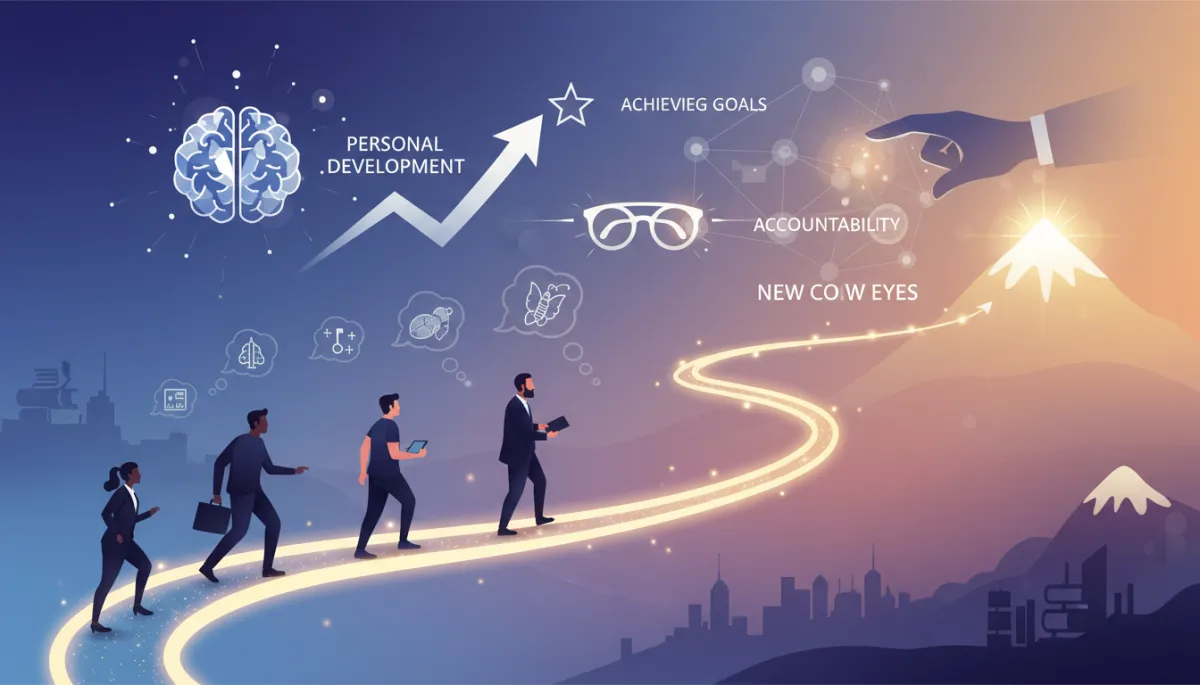
Why Every Professional Needs a Success Coach
Professional Growth, Coaching, Success Mindset
Who Needs a Coach? Why Every Professional Deserves a Success Partner
Behind every high performer is someone who challenges them, supports them, and refuses to let them shrink back to average. That “someone” is often a coach. In a world that rewards continuous growth, the real question isn’t “Who needs a coach?” but rather, “Can you afford not to have one?”
Coaching as a Catalyst for Personal Development
Professional success rarely happens by accident. It is the result of deliberate personal development—clarifying who you want to become, then consistently taking aligned action. Coaching accelerates this process by turning vague ambitions into concrete, achievable goals and daily behaviors.
A skilled coach helps you see the gap between where you are and where you want to be, not as a source of shame, but as a roadmap. Through powerful questions, honest feedback, and structured reflection, coaching supports you in developing:
Self-awareness – understanding your strengths, blind spots, and default patterns under pressure.
Emotional regulation – responding rather than reacting, even in high-stakes situations.
Decision-making clarity – aligning choices with your long-term values and goals, not short-term comfort.
Consider Maya, a mid-level manager who felt stuck. She was competent, respected, but invisible when promotion conversations happened. Through coaching, she discovered that her habit of downplaying her achievements came from an old belief that “self-promotion is bragging.” Her coach didn’t simply tell her to “be more confident.” Instead, they co-created a strategy: track weekly wins, practice sharing results in meetings, and rehearse promotion conversations. Within a year, Maya stepped into a senior role—not because she suddenly became more talented, but because coaching helped her grow into the leader she already had the potential to be.
The Power of an Accountability Partner Who Won’t Let You Play Small
Most professionals know what they should do: have clearer priorities, delegate more, network strategically, protect time for deep work, invest in their health. The gap is rarely information; it’s consistent execution. This is where an accountability partner—your coach—becomes invaluable.
An effective coach acts as a mirror and a scoreboard. They help you set specific commitments (“I will schedule three stakeholder conversations this week” rather than “I’ll network more”) and then they circle back. At your next session, there’s no hiding behind busyness or excuses. You either did what you said you would, or you didn’t—and that honest check-in is often the difference between drifting and deliberate progress.
💡 Pro Tip: When working with a coach, treat every agreement as a promise to your future self. The real value isn’t in the plan; it’s in following through.
Accountability is not about being policed; it’s about being supported at a higher standard than you might hold for yourself in the moment. Ambitious professionals face constant competing priorities. A coach helps you stay accountable to what matters most, even when urgent distractions scream for attention.
How Coaching Can Transform Lives, Not Just Careers
While many seek coaching for career advancement, the ripple effects often extend far beyond the office. When you upgrade your mindset, habits, and self-belief, every area of life shifts—relationships, health, confidence, and even how you handle setbacks.
Take Daniel, a high-performing sales director. On paper, he was successful. Behind the scenes, he was exhausted, missing family milestones, and living in a constant state of stress. His executive coach didn’t just focus on numbers; they explored his identity as a leader and as a father. Together, they designed boundaries, restructured his team’s responsibilities, and reframed “rest” from a luxury to a performance tool. Within months, Daniel’s revenue grew—and so did his presence at home. Coaching didn’t just transform his quarterly results; it transformed his life.

Group coaching multiplies insight and accountability while normalizing ambitious growth.
Different Types of Coaches—and How They Support Your Success
“Coach” is not a one-size-fits-all role. Different types of coaches serve different needs, yet they all share a common purpose: helping you move from where you are to where you want to be.
Executive Coaches: Strategic Partners for Senior Leaders
Executive coaches work with senior leaders navigating complex decisions, high visibility, and intense pressure. They provide a confidential space to test ideas, process challenges, and refine leadership style. One CEO might use coaching to navigate a merger; another to rebuild trust after a difficult restructuring. In both cases, the coach isn’t there to give orders, but to ask the questions no one else dares to and to hold the leader accountable to their highest standards and stated values.
Career Coaches: Navigators Through Transition and Growth
Career coaches help professionals clarify direction, position their strengths, and make intentional moves. Imagine a high-potential analyst who feels drawn to product management but doesn’t know where to start. A career coach might guide them to identify transferable skills, build a portfolio of internal projects, and craft a compelling narrative for interviews. The result is not just a new role, but a deeper sense of agency over their career path.
Performance and Mindset Coaches: Rewiring the Inner Game
Performance or mindset coaches focus on the beliefs and habits that either fuel or sabotage success. They help you identify the internal narratives—“I’m not ready,” “I always mess up presentations,” “I’m terrible with conflict”—that quietly cap your potential. By challenging these stories and replacing them with intentional practices, mindset coaches help professionals show up with more confidence, resilience, and focus, especially when the stakes are high.
Life and Wellness Coaches: Sustaining the Human Behind the Title
Life and wellness coaches ensure that ambition doesn’t come at the cost of well-being. They work with clients to design routines, boundaries, and habits that support energy, health, and meaningful relationships. For many professionals, this kind of coaching is what makes long-term success sustainable, rather than a sprint toward burnout.
Seeing Your Situation with New Eyes
One of the greatest gifts of coaching is perspective. When you’re in the middle of your own story, it’s hard to see the full picture. You may overestimate obstacles, underestimate your strengths, or misinterpret others’ behavior. A coach brings fresh, objective eyes to your situation—eyes that are trained to spot patterns, assumptions, and opportunities you might miss.
This outside perspective is especially powerful when you’re facing recurring challenges: the same conflict with a colleague, the same hesitation before speaking up, the same tendency to overcommit. A coach helps you step back and ask, “What’s really happening here?” That shift in perspective often reveals simple but powerful changes: a boundary to set, a conversation to initiate, a belief to release. With new eyes, familiar problems become solvable puzzles, not permanent roadblocks.
Staying Accountable on the Path to Your Full Potential
High performers are often surrounded by people who depend on them—but rarely by people who challenge them. Colleagues may hesitate to give honest feedback, and friends may prioritize comfort over candor. A coach fills that gap, combining support with uncompromising accountability.
Over time, coaching builds a powerful habit: you start to hold yourself to the standards you once needed someone else to reinforce. You catch your own excuses. You notice when you’re negotiating with your goals. You become the kind of professional who does what they said they would do—even when no one is watching. That is the essence of a success mindset, and it’s the bridge to reaching your full potential.
So, Who Really Needs a Coach?
If you are content staying exactly where you are—professionally, financially, emotionally—then perhaps you don’t. But if you:
Sense that you’re capable of more than your current results show,
Feel stuck in patterns you can’t quite break on your own,
Want a trusted partner who will both champion and challenge you,
…then a coach is not a luxury; it’s a strategic advantage. Athletes at the top of their game don’t ask, “Do I still need a coach?” They ask, “Who is the right coach for my next level?” The same is true for ambitious professionals. Everyone needs a coach—not because you’re weak, but because you’re serious about growth, accountability, and realizing your full potential.
Your goals are too important to leave to chance. If you’re ready to see your situation with new eyes, stay accountable to what truly matters, and step into the next version of your success, it may be time to ask yourself a different question: “Who will be my coach?”
