Embrace Your Power: Unlock Your True Potential
Personal Growth, Mindset, Self-Belief
Embrace Your Inner Big Dog: Owning Your Power and Potential
Many people move through life like gentle giants—immensely capable, yet convinced they are smaller than they really are. Others bark loudly, certain they are in control, even when their power exists only in their heads. Recognizing which one you are—and who you could become—is the first step to living up to your true potential.
The Tale of Two Dogs: A Small Bark and a Quiet Giant
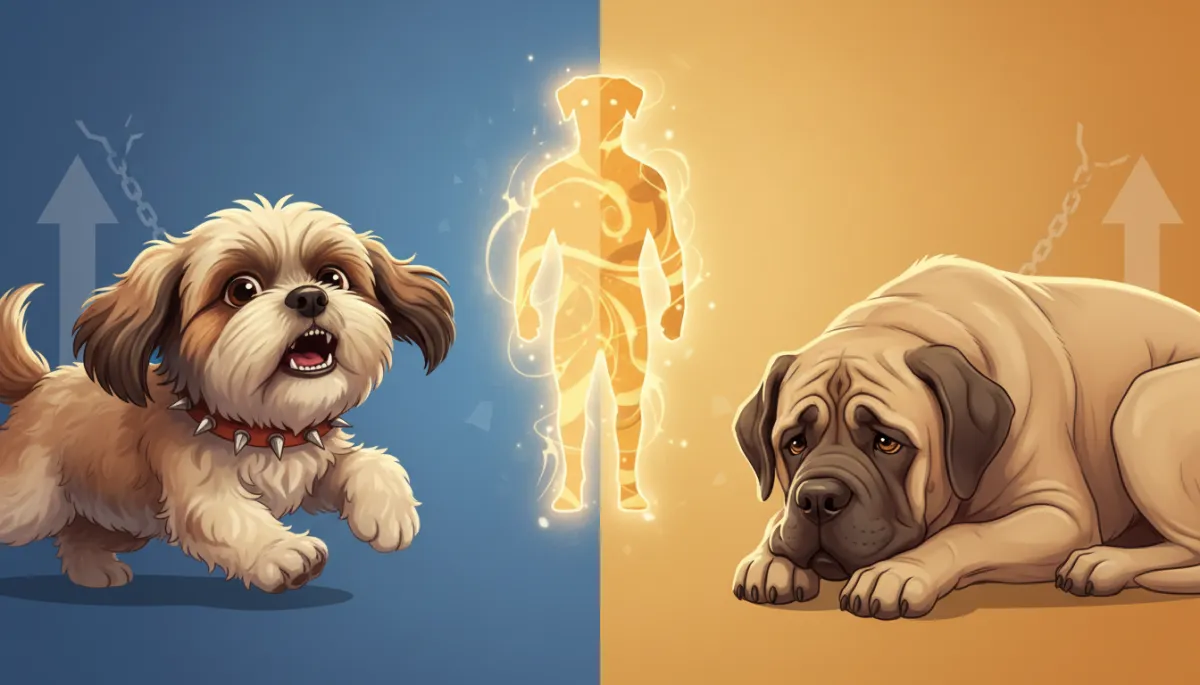
Picture this: a tiny Lhasa Apso, all fluff and attitude, struts down the sidewalk. The moment another dog appears, this little bundle of fur explodes into frantic barking—lunging, yapping, pulling at the leash as if it’s ready to take on the world. It suffers from what many call “Little Dog Syndrome”: loud, dramatic, and overcompensating for its size with sheer bravado.
A few minutes later, a massive Mastiff ambles by. Its head is the size of the Lhasa’s entire body. Its paws are like dinner plates. Yet when another dog approaches, this giant shrinks back slightly, eyes uncertain, body tense. It could easily overpower almost any dog in the park, but it doesn’t act like it. Instead, it hesitates, unsure of its own strength, nervous about the chaos it might cause if it ever fully let go.
These two dogs are powerful metaphors for how we see ourselves. Some of us are the little dog—projecting confidence without much substance. Others are the Mastiff—strong, capable, and gifted, but held back by timidity, self-doubt, or a misunderstood sense of humility. The truth? Many of us are secretly the Mastiff, walking around like we’re the Lhasa Apso, completely unaware of the power we’re not using.
Why Recognizing Your Own Power and Potential Matters
Recognizing your power is not about arrogance; it is about accuracy. When you underestimate yourself, you make decisions from a place of limitation. You stay in jobs that drain you, relationships that shrink you, and routines that keep you stuck. You say “no” to opportunities you could absolutely handle because you assume you are not ready, not qualified, or not “that kind of person.”
Your self-perception sets the ceiling for your behavior. If you see yourself as fragile, you will avoid risk. If you see yourself as incapable, you won’t even try. If you see yourself as undeserving, you will quietly sabotage your own progress. On the other hand, when you begin to recognize your power and potential, your choices expand. You start to apply for the promotion, share your ideas, launch the project, sign up for the course, or simply speak up in the room instead of shrinking into the background.
💡 Key Insight: You do not act according to who you truly are—you act according to who you believe you are.
How Self-Perception Shapes Behavior and Success
Think of self-perception as the internal script that runs in the background of your life. If your script says, “I’m just average,” you will make average choices, accept average results, and rarely challenge the narrative. If your script says, “I’m capable of figuring things out,” you will approach challenges with curiosity instead of fear. The story you tell yourself becomes the story you live out.
The “little dog” mindset leads to overcompensation—talking more than doing, chasing validation, and needing constant reassurance.
The “timid Mastiff” mindset leads to under-expression—downplaying wins, hiding talents, and backing away from opportunities you could actually handle.
Success is rarely about raw potential alone; it is about how much of that potential you are willing to use. Two people with similar abilities can end up in very different places simply because one believed they belonged in the arena while the other sat in the stands, convinced they weren’t ready to play.

When self-perception shifts, the risks you are willing to take expand dramatically.
For the Humble, the Hesitant, and the Afraid of Their Own Success
If you struggle with self-doubt, humility, or even a quiet fear of success, you are not alone. Many thoughtful, kind, and capable people live in this space. You may worry that owning your strengths will make you arrogant. You may fear that if you succeed, people will expect more from you, or that you will somehow lose yourself. You might even be afraid of being seen—really seen—for who you are and what you can do.
But humility does not mean pretending you are smaller than you are. Real humility is truth-based. It is acknowledging your weaknesses and your strengths with honesty. It is saying, “Yes, I have a lot to learn—and I also have a lot to offer.” When you deny your abilities in the name of humility, you are not being modest; you are being inaccurate. And that inaccuracy costs you—and often the people who needed what you had to give.
📌 Key Takeaway: You can be deeply humble and still walk into a room knowing you belong there.
The Hidden Dangers of Hiding Behind Humility or Fear
Hiding your power might feel safe, but it comes with real consequences. When you constantly step back, you:
Miss opportunities that would have stretched and rewarded you.
Teach others to overlook you because you consistently underplay your value.
Reinforce your own doubts every time you choose comfort over courage.
Deprive others of the skills, ideas, and support you could have offered if you showed up fully.
Over time, this pattern leads to quiet resentment—of your circumstances, of other people’s success, and sometimes even of yourself. Deep down, you know you are capable of more. You feel it when you see someone doing something you could do, or when you watch opportunities pass by that you were too afraid to reach for. That tension between who you are and who you are pretending to be is exhausting.
Embrace Your Inner Big Dog: Stepping Into Your Full Potential
To embrace your inner “big dog” is not to become loud, aggressive, or domineering. It is to recognize that you are not the small, helpless creature your fear wants you to be. It is choosing to stand a little taller, speak a little clearer, and act a little bolder because you finally trust that you can handle what comes next.
Start with simple, practical shifts:
Notice your “small dog” thoughts. When you catch yourself thinking, “Who am I to do this?” or “I’m not ready,” pause and ask, “Is that actually true—or just familiar?”
List your strengths honestly. Not what you wish you were good at—what you already are. Skills, experiences, qualities, and ways you help others all count.
Take one “big dog” action. Apply for something, volunteer, share an idea, raise your hand, ask for feedback, or start the project you keep postponing.
Practice receiving recognition. When someone compliments you, resist the urge to deflect. Try a simple, “Thank you, I appreciate that,” and let it land.
💡 Pro Tip: Confidence is not a personality trait; it is a skill built through repeated, courageous action.
The Benefits of Owning Your Power
When you stop hiding and start owning your power, subtle but profound changes begin to unfold:
Greater clarity: You make decisions aligned with your true abilities and values, not your fears.
Healthier boundaries: You stop over-pleasing and start choosing where your time and energy go.
More impact: Your work, words, and presence begin to influence others in meaningful ways.
Deeper fulfillment: You feel the quiet satisfaction of using what you have, instead of burying it.
Most importantly, you begin to trust yourself. Not because you think you are perfect, but because you know you are powerful enough to learn, adapt, and grow. You stop waiting to feel ready and start acting from the truth that you are already more prepared than you realize.
You Are More Powerful Than You Think
Somewhere inside you, the “big dog” is already there—the part of you that is stronger than your fear, wiser than your self-doubt, and more capable than your inner critic will ever admit. You do not need to become someone else; you need to stop pretending you are smaller than you are. The Mastiff does not need to learn how to be big; it needs to realize it has always been big.
So the next time you feel yourself shrinking back, remember the two dogs. Ask yourself: Am I barking like the little dog to cover my insecurity—or hiding like the big dog, afraid of my own strength? Then take one small, brave step in the direction of your potential. Over time, those steps add up to a life that actually reflects who you are, not who your fear told you to be.
You are not here to spend your life on a short leash, apologizing for your size, your voice, or your dreams. You are here to stand in your full height, own your power, and use it well. The world does not need more people pretending to be small. It needs you, fully present, fully engaged, and fully you.
