Embrace Failure: Key to Long-Term Success
Personal Growth, Mindset, Resilience
How Your Relationship to Failure Shapes Your Long-Term Success
The way you think about failure today is quietly determining how far you will go tomorrow. Treat it as something to fear and avoid, and it will shrink your life. Treat it as a teacher, and it will become one of your greatest allies on the path to long-term success.
Your Relationship to Failure: The Hidden Driver of Your Future
Two people can experience the same setback and end up with completely different futures. The difference is not in the event itself, but in their relationship to failure. One person sees failure as a verdict: “This proves I’m not good enough.” The other sees it as feedback: “This shows me what to adjust next time.” Over years, that small difference compounds into radically different levels of confidence, skill, and success.
Your relationship to failure influences whether you take bold action or play small, whether you keep going or quietly give up, whether you grow or stay stuck. If failure means shame, you will naturally avoid risks and protect your ego. If failure means learning, you will naturally stretch, experiment, and expand your capacity. Long-term success is less about avoiding mistakes and more about what you do after you make them.
How Avoiding Failure Holds You Back
Many of us were raised to believe that the goal is to get things “right” the first time. We were praised for correct answers and punished for wrong ones. Over time, we learned to avoid failure, to fear it, and to build our lives around not making mistakes. It sounds safe, but it quietly sabotages growth and development in several ways.
You stop taking risks. When failure feels terrifying, you choose only what you already know you can do. That means no new skills, no new challenges, and no real expansion of your potential.
You stay in your comfort zone. Comfort becomes more important than growth. You may feel safe, but you also feel quietly unfulfilled and underused.
You move slowly, if at all. Trying never to make mistakes leads to overthinking and perfectionism. You spend more time planning than doing, and opportunities pass by while you’re waiting to feel “ready.”
Ironically, the attempt to avoid failure almost guarantees it—just in a different form. You may not fail publicly, but you fail privately by not living up to your potential, not pursuing your dreams, and not discovering what you’re truly capable of. In the long run, the fear of failure becomes more damaging than failure itself.
Turning Failure from a Detour into a Dividend
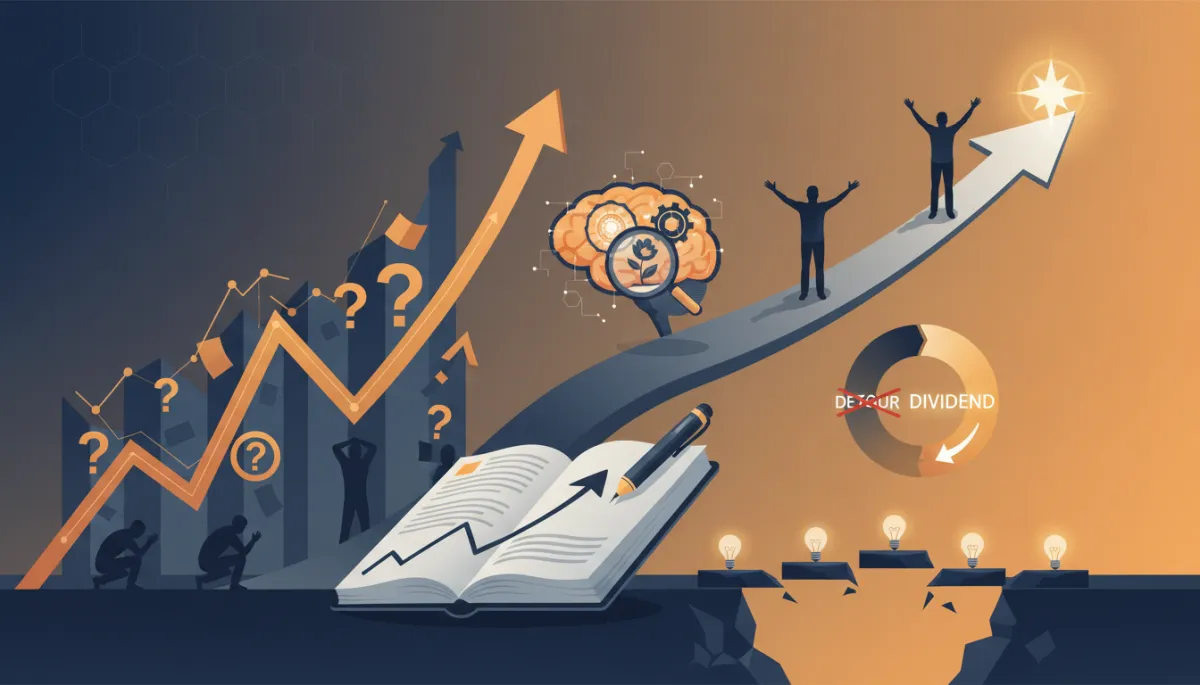
In his book on failing forward, John Maxwell suggests that we must “change failure from a detour to a dividend.” A detour is something annoying that takes you off your intended route. A dividend is a return on an investment—something that pays you back with interest. The event can be the same, but the meaning you give it determines whether it becomes a detour or a dividend in your life.
When you see failure as a detour, you focus on what you lost: time, money, reputation, comfort. You replay the mistake, criticize yourself, and maybe decide it’s safer not to try again. But when you see failure as a dividend, you ask different questions: What did this teach me? How can I use this experience to get better? What will I do differently next time? Now, the same event becomes an investment in your future wisdom, resilience, and skill.

Treat each setback as data and you convert pain into long-term progress.
Viewing Failure as Your Toughest, Most Honest Teacher
Failure is not pleasant, but it is incredibly honest. It doesn’t flatter you. It doesn’t sugarcoat your weaknesses. It shows you, with clarity, where your current approach is not working. When you choose to view failure as a teacher, you gain access to benefits that people who fear it never receive:
Failure is filled with lessons. Every misstep contains specific information about what to adjust: your strategy, your timing, your effort, your skills, or your expectations. If you’re willing to look, you will find insight.
Failure helps identify areas for improvement. It highlights the exact skills you need to develop, the habits you need to change, and the blind spots you need to address. Instead of guessing what to work on, you now have a clear roadmap.
Failure redirects your path if you are off purpose. Sometimes a setback is not just about execution—it’s about direction. A closed door can be a signal that you’re pursuing something that doesn’t truly align with who you are or what you value most.
When you relate to failure as a teacher instead of a tyrant, you stop asking, “Why did this happen to me?” and start asking, “What is this here to teach me?” That simple shift transforms your emotional experience and your long-term trajectory.
💡 Pro Tip: After any setback, write down three lessons and one concrete change you will make next time. This turns pain into a practical learning tool.
How to Fail Forward: Attacking Your Dreams with Passion and Action
Failing forward is not about enjoying failure or seeking it out. It’s about moving through it in a way that pushes you closer to your goals instead of further away. To fail forward, you must be willing to attack your dreams with both passion and action, while staying aware of your failures and what they’re telling you.
Clarify a dream that matters. Failing forward starts with pursuing something you genuinely care about. When your dream is meaningful, setbacks feel like part of the journey, not a reason to abandon it.
Take bold, imperfect action. Passion without action is just wishful thinking. Commit to moving even when you don’t have all the answers. Every action gives you feedback; every attempt refines your path.
Be aware of your failures. Don’t ignore or minimize them. Look them in the eye. Ask: Where did I fall short? What assumptions were wrong? What patterns are emerging? Awareness turns random mistakes into intentional learning.
Adjust quickly and keep moving. Failing forward means you don’t stay stuck in analysis. You extract the lesson, adjust your strategy, and take the next step. Movement is essential; reflection without action leads to stagnation.
Over time, this cycle—act, fail, learn, adjust, act again—builds momentum. You stop seeing failure as a final judgment and start seeing it as a temporary stage in the process of mastering anything worthwhile.
What Successful People Know About Failure
If you study people who have achieved meaningful, sustainable success—in business, art, sports, or personal life—you’ll notice some common attitudes toward failure. They are not superhuman. They simply relate to failure differently than most.
They do not fear failure. They may not enjoy it, but they expect it as part of growth. They understand that anything worth doing well will be done badly at first. Fear is present, but it doesn’t make their decisions.
They keep a sense of humor. Successful people can often laugh at their own missteps. Humor creates emotional distance, reduces shame, and makes it easier to try again. If you can smile at your past self, you can support your future self.
They take responsibility. Instead of blaming others or circumstances, they ask, “What part of this is mine to own?” Taking responsibility is not about self-blame; it is about reclaiming the power to change your results.
They learn from setbacks. They treat every disappointment as data. They build reflection into their routines, debrief their experiences, and consciously apply the lessons to their next attempt.
These habits are not reserved for a gifted few. They are practices you can adopt, starting now, regardless of your past. The more you practice them, the more natural they become—and the less power failure has to stop you.
“Failure Doesn’t Exist, Only Quitting”
There is a powerful idea that can reframe your entire experience of setbacks: failure doesn’t exist, only quitting. As long as you are still learning, still adjusting, and still moving, you have not failed—you are simply in the middle of the process. The only true failure is deciding that the story is over when it doesn’t have to be.
This doesn’t mean you should stubbornly push in the same direction forever. Sometimes “not quitting” looks like changing your approach, redefining your goal, or choosing a path that aligns more deeply with your purpose. What it does mean is that you refuse to let a setback be the final word on what is possible for you.
“You are not finished just because you’ve fallen. You are finished only if you stay down.”
Where Are You Stopped Right Now?
Take a moment and turn the spotlight inward. Not in a harsh, critical way, but with honest curiosity. Ask yourself:
Where am I currently stopped because I’m afraid to fail again?
What dream, project, or change did I quietly put on hold after a setback?
What story am I telling myself about that failure—does it say “I’m not capable,” or “I’m still learning”?
If I believed that failure doesn’t exist, only quitting, how would I show up differently today?
The answers to these questions reveal your current relationship to failure. They show you where fear is quietly steering your decisions and where a new perspective could unlock fresh energy and action.
How Can You Start Again Today?
Starting again doesn’t require a grand gesture. It begins with one honest decision: I will treat this past failure as a teacher, not a life sentence. From there, you can take simple, practical steps:
Write down the story you’ve been telling. Put on paper how you’ve been interpreting your setback. Then ask: Is this story helping me grow, or keeping me stuck?
Extract the lessons. List what this experience has taught you about your strengths, your limits, and your next steps. Remember: failure is filled with lessons if you’re willing to look for them.
Choose one small action. It might be sending an email, making a call, signing up for a class, or trying again in a slightly different way. The goal is to re-enter motion, not to be perfect.
Bring humor and responsibility with you. Smile at your past self, own your part, and step forward. You are not the person who failed—you are the person who is choosing to learn from it.
Your Call to Action: Redefine Failure and Begin Anew
Your long-term success will not be determined by how perfectly you avoid mistakes, but by how courageously you respond to them. You have a choice, starting now, to change your relationship to failure—from something to fear into something that fuels you. You can change it from a detour that stops you to a dividend that pays you back in wisdom, resilience, and clarity of purpose.
Today, give yourself a few quiet minutes and reflect:
What is my current relationship to failure—fearful, avoidant, or curious and open?
Where have I let a setback convince me to quit on myself or my dreams?
What is one step I can take today to learn from that experience and begin again?
Remember: failure doesn’t exist, only quitting. As long as you are willing to learn, adjust, and move forward, you are still in the game. Let your past failures become your teachers, your guides, and your greatest dividends. Start where you are, use what you have, and take the next small step. Your future self will thank you for refusing to let failure have the final word.
