Effective Project Planning for Leaders
Leadership, Project Management, Strategic Planning
Project Planning with Intention: The Leadership Discipline Behind Every Successful Initiative
For professionals leading complex initiatives, project planning is not a bureaucratic hurdle or a set of templates to complete. It is a leadership discipline. A powerful project plan becomes the roadmap that translates vision into execution, aligning people, resources, and decisions around a shared destination and a clear path to get there.
Why Project Planning Is a Leadership Imperative
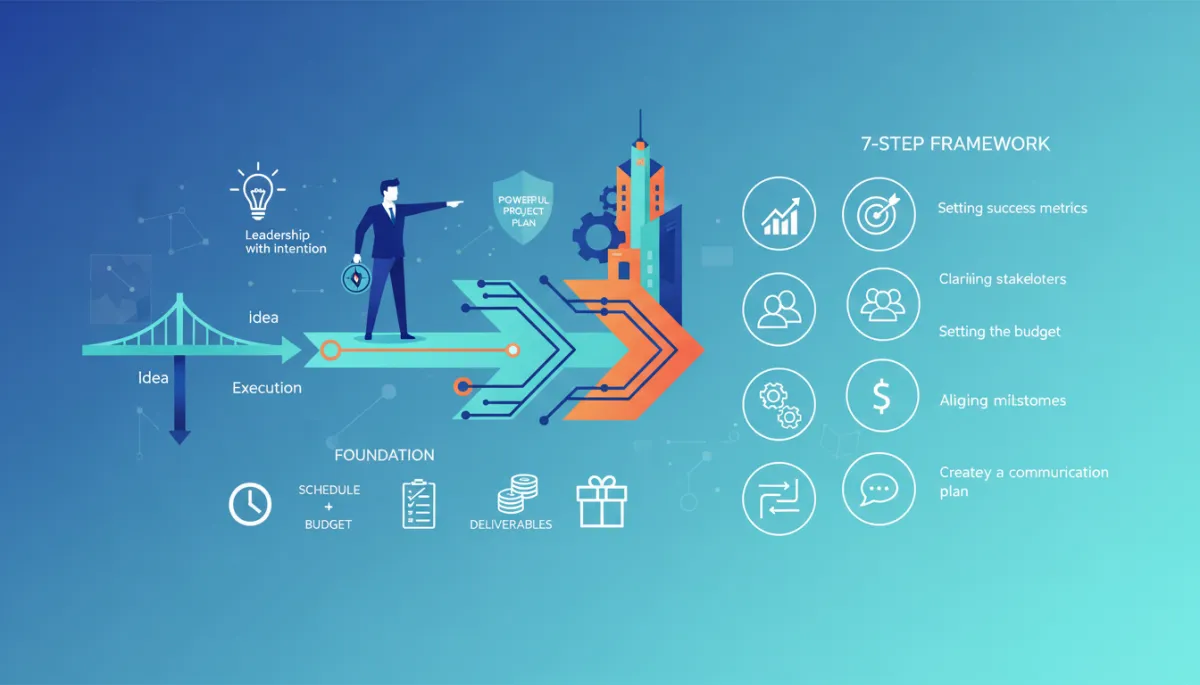
At its core, project planning is the deliberate act of designing how an idea will become reality. It is the bridge between inspiration and implementation, between “we should” and “we did.” Leaders who treat planning as optional often find their teams mired in rework, confusion, and missed expectations. Leaders who plan with intention, by contrast, create conditions for repeated success, predictability, and scalability.
Effective project planning answers fundamental leadership questions: What exactly are we trying to achieve? How will we know we are successful? Who is responsible for what? When will each part be delivered? What resources and budget are required? The act of answering these questions in a structured, methodical way is what transforms a good idea into an executable strategy.
What Project Planning Really Is: The Bridge Between Idea and Execution
Project planning is often mistaken for scheduling alone, or for filling out a Gantt chart. In reality, it is a comprehensive thinking process. It is the structured design of how a project will move from concept to completion, considering goals, constraints, risks, stakeholders, and the practical steps required to deliver value.
Think of project planning as the bridge between idea and execution. On one side is the vision: a new product launch, a system implementation, a strategic transformation, a regulatory initiative. On the other side is measurable impact: customers using the product, teams operating on the new system, compliance achieved, benefits realized. The plan is the engineered structure that allows your team to cross safely and efficiently from one side to the other, without getting lost in the middle or falling into the gaps of ambiguity and misalignment.
The Project Plan as Foundation and Instruction Manual
A strong project plan is more than a document; it is the foundation on which clear goals, resources, schedule, and deliverables rest. Without that foundation, even the most talented team will struggle to perform consistently. With it, individuals understand how their work fits into the broader strategy and can make decisions that support the overall outcome.
You can also think of the project plan as the instruction manual for execution. Just as a complex piece of equipment comes with step-by-step instructions to assemble and operate it safely, a project plan maps out goals, objectives, tasks, schedule, and budget in a way that is specific, concrete, and actionable. The more precise the instructions, the less room there is for confusion, misinterpretation, or conflicting priorities during delivery.
📌 Key Takeaway: A project plan is not paperwork; it is the operational blueprint that turns leadership intent into coordinated action.
The Power of Being Specific, Concrete, Methodical, and Clear
Many projects fail not because the idea was flawed, but because the plan was vague. Vague goals such as “improve customer experience” or “modernize the platform” leave too much to interpretation. Teams fill the gaps with their own assumptions, generating misalignment and friction. Effective project planning demands that leaders be specific, concrete, methodical, and clear.
Specific means defining exactly what will be delivered and what will not. Ambiguity is the enemy of execution.
Concrete means translating abstract aspirations into observable outcomes, metrics, and deliverables that can be verified.
Methodical means following a logical sequence: from goals to scope, from scope to tasks, from tasks to timelines and resources, and from there to monitoring and control.
Clear means expressing the plan in language and visuals that every stakeholder can understand, regardless of function or seniority.
When leaders insist on this level of precision, they are not being rigid; they are creating the conditions for empowered execution. Clarity liberates teams to move quickly and confidently because they know exactly what success looks like and how to contribute to it.
The Moving Parts of a Project Plan: Destination and Directions
A well-crafted project plan is made up of interconnected components. Each part plays a distinct role, but together they function like a navigation system: defining the destination and providing turn-by-turn directions to reach it. Key moving parts include goals, timelines, and the Work Breakdown Structure (WBS).
Goals: Defining the Destination
Goals articulate the “why” and the “what” of the project. They describe the desired end state in business terms, such as “reduce onboarding time by 30%,” “launch the new product in three markets,” or “achieve compliance with the new regulation by Q4.” Clear goals act as the destination in your roadmap: they anchor every decision and trade-off throughout the project lifecycle.
Timelines: Setting the Pace and Sequence
Timelines translate goals into a paced, realistic schedule. They consider dependencies, resource availability, and external constraints. A robust timeline is not just a final deadline; it includes milestones, interim deliverables, and decision points. These markers enable leaders to monitor progress, adjust course when necessary, and maintain momentum without burning out the team.
Work Breakdown Structure (WBS): Turning the Journey into Manageable Steps
The Work Breakdown Structure (WBS) is the backbone of the project plan. It decomposes the project into smaller, manageable components—phases, deliverables, and tasks—so that nothing essential is overlooked. The WBS answers the question: What exact pieces of work must be completed to achieve the goal? It provides the structure from which you can estimate effort, assign responsibilities, and identify dependencies with confidence.

Visualizing the work breakdown structure clarifies scope, ownership, and sequencing for everyone.
When goals, timelines, and WBS are aligned, they work together as destination and directions. Goals define where you are heading; the WBS outlines the steps; the timeline dictates when each step must occur. This integrated view is what allows leaders to manage complexity without losing sight of the bigger picture.
Why Project Plans Matter: Clarity, Direction, Accountability, Alignment
A powerful project plan is not a luxury; it is a necessity for professional execution. Its value can be seen in four critical outcomes: clarity, direction, accountability, and alignment.
Clarity: Everyone Knows What Success Looks Like
Clarity eliminates guesswork. A clear plan defines success criteria, scope boundaries, and priorities. Team members understand what “done” means for each deliverable, which reduces rework and misaligned efforts. Stakeholders know what to expect and when, reducing anxiety and reactive requests that can derail progress.
Direction: A Roadmap for Daily Decisions
Direction provides a sense of forward movement. When a plan lays out the sequence of work, teams can prioritize effectively and make informed trade-offs. Instead of reacting to the loudest voice or latest email, they can refer back to the roadmap and ask, “Does this support the next milestone?” That discipline is what keeps projects moving in the right direction, even when unexpected issues arise.
Accountability: Clear Ownership and Expectations
Accountability thrives when responsibilities and expectations are explicit. A project plan should spell out who owns each task, decision, and deliverable. This does not mean micromanagement; it means that every person understands their role and how their performance will be evaluated. When ownership is clear, follow-through improves, and leaders can coach and support instead of constantly chasing status updates.
Alignment: Connecting Effort to Strategy
Alignment ensures that the project supports broader organizational objectives. A thoughtful plan connects project goals to strategic priorities, ensuring that time and resources are invested where they matter most. This alignment also helps resolve conflicts between initiatives, as leaders can see which projects directly support key outcomes and adjust accordingly.
⚠️ Warning: In the absence of a clear plan, disorganization, inefficiencies, and scope creep fill the vacuum—often quietly at first, then all at once.
When a project proceeds without a robust plan, teams experience conflicting priorities, duplicated work, missed dependencies, and last-minute surprises. Meetings become status firefights instead of strategic check-ins. Leaders are forced into constant crisis management. The cost is not only financial; it is reputational and cultural as well. Over time, people lose confidence in the organization’s ability to deliver on its promises.
A 7-Step Framework for Creating an Effective Project Plan
To bring structure to your planning process, the following seven-step framework provides a practical guide. Each step reinforces the others, resulting in a project plan that is both comprehensive and usable in day-to-day execution.
1. Define Clear, Outcome-Based Goals
Begin by defining what success looks like in concrete terms. Move beyond generic statements and describe the specific outcomes you intend to achieve. For example, instead of “improve reporting,” define “implement a new reporting dashboard that reduces monthly report preparation time from five days to two, with 95% data accuracy.” These clear goals become the anchor for scope, design decisions, and trade-offs throughout the project.
2. Set Success Metrics and Acceptance Criteria
Once goals are defined, establish how you will measure success. Identify a small set of success metrics—quantitative and qualitative—that will indicate whether the project delivered its intended value. Complement these with acceptance criteria for key deliverables, specifying what must be true for stakeholders to sign off. This step ensures that “done” is not a matter of opinion but of agreed standards.
3. Clarify Stakeholders, Roles, and Responsibilities
Projects succeed when the right people are involved at the right times, with clearly understood responsibilities. Identify key stakeholders: sponsors, decision-makers, subject-matter experts, end users, and delivery teams. Clarify roles using simple models such as RACI (Responsible, Accountable, Consulted, Informed) or equivalent. Document who owns which decisions, who provides input, and who must be kept informed. This step is essential for building accountability into the plan rather than relying on informal influence alone.
4. Set and Validate the Budget and Resource Plan
With goals and stakeholders defined, develop a realistic view of the budget and resources required. This includes financial costs, internal capacity, external vendors, tools, and infrastructure. Use your WBS to estimate effort and cost by component, then aggregate to form a total budget. Validate assumptions with functional leaders and finance partners. A plan that ignores budget realities is a wish list, not a roadmap; a plan grounded in realistic resource constraints can actually be executed.
5. Align Milestones, Dependencies, and Risk Considerations
Using your WBS, identify the major milestones that represent meaningful progress points—such as design completion, pilot launch, or regulatory submission. Map dependencies between tasks and milestones: which activities must be completed before others can start, and which can run in parallel. At this stage, explicitly consider risks and constraints. Where dependencies are fragile or external (for example, vendor delivery dates or regulatory approvals), build contingency and mitigation strategies into the plan. This proactive thinking dramatically reduces last-minute crises.
6. Outline a Realistic, Phased Timeline
Translate milestones and dependencies into a timeline that balances ambition with feasibility. Break the timeline into phases—such as discovery, design, build, test, deploy—and assign start and end dates based on resource availability and organizational rhythms. Include buffer where uncertainty is high, and avoid compressing critical-path activities unrealistically. A realistic timeline builds trust; an overly optimistic one erodes credibility as soon as the first slip occurs.
7. Create a Deliberate Communication and Governance Plan
Finally, define how you will communicate and govern the project. A communication plan specifies who needs what information, in what format, and how often. It might include weekly team stand-ups, monthly steering committee updates, and targeted communications for impacted business units. In parallel, establish a simple governance structure: how decisions are escalated, how changes to scope or budget are evaluated, and how risks are reported. This framework keeps the plan alive and relevant throughout execution, rather than letting it become a static document filed away after kickoff.
💡 Pro Tip: Treat your communication plan as part of the work, not an afterthought. Transparent, predictable communication is often the difference between a project that is tolerated and one that is actively supported.
Leadership with Intention: Owning the Plan, Owning the Outcome
Underneath the tools and templates, project planning is a form of leadership. It is the leader’s willingness to think ahead, make choices, and articulate them clearly so that others can act with confidence. Owning the plan is owning the outcome. When leaders actively shape, endorse, and reference the plan, they send a powerful signal: this is not a side activity; it is the agreed path to delivering on our commitments.
Leadership with intention means:
Taking the time to engage with stakeholders during planning, not only during crisis.
Being explicit about priorities, trade-offs, and constraints, rather than leaving them implied.
Revisiting and adjusting the plan when new information emerges, instead of ignoring reality to protect a baseline.
Modeling the discipline of planning so that it becomes part of the organization’s culture, not just a one-off effort.
When leaders embrace planning as a core responsibility, they create an environment where teams can focus on execution rather than constant clarification. Over time, this discipline compounds into repeated success, greater predictability, and true scalability. Projects stop being heroic efforts that depend on a few individuals and become reliable, repeatable capabilities of the organization.
Bringing It All Together: Craft Your Next Plan with Clarity and Intentionality
For professionals responsible for delivering meaningful outcomes, project planning is not optional paperwork; it is the strategic mechanism that connects leadership vision to operational reality. A powerful project plan serves as a roadmap for execution, a foundation for clear goals and resources, and an instruction manual that guides day-to-day decisions on tasks, schedule, and budget. It brings together goals, timelines, and the Work Breakdown Structure into a coherent view of both destination and directions.
When you plan with intention—being specific, concrete, methodical, and clear—you create clarity, direction, accountability, and alignment across your stakeholders. You reduce the disorganization and inefficiencies that arise from ambiguity. You transform projects from one-time efforts into predictable, scalable capabilities. Most importantly, you demonstrate a form of leadership that respects your team’s time and talent by giving them a plan worthy of their commitment.
As you approach your next initiative, resist the temptation to rush from idea to action. Instead, pause and design a project plan that truly bridges the gap between vision and execution. Define your goals and metrics. Clarify roles and budget. Map your milestones, dependencies, and timeline. Establish a communication plan that keeps everyone informed and engaged. Then, own that plan—review it, refine it, and use it as the central reference point for decisions and adjustments.
In doing so, you are not just managing a project; you are practicing intentional leadership. You are building a reputation for delivering on your commitments, not once, but consistently. And you are equipping your organization with the discipline it needs to turn ambitious ideas into tangible, repeatable results.
The next time you sit down to lead a new initiative, ask yourself: What kind of roadmap am I giving my team? The answer, reflected in the quality of your project plan, will shape not only the outcome of that project but also the trajectory of your leadership journey.
