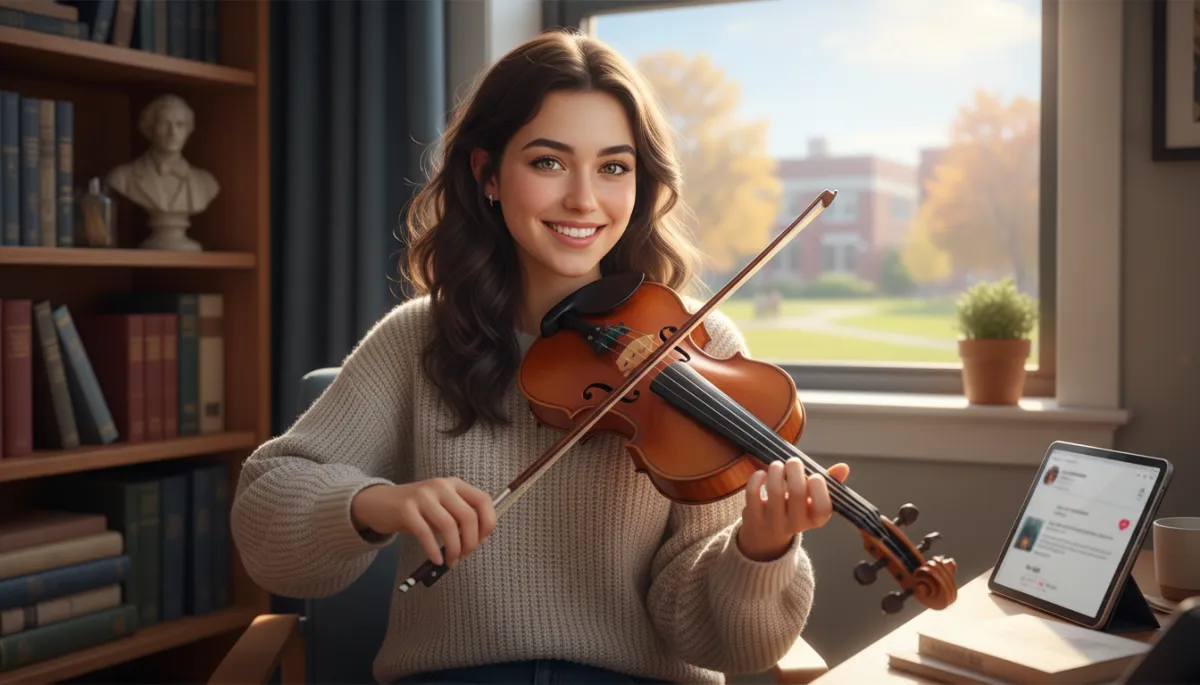
Discovering Identity Through Music and Writing
Life, Music, Growing Up
“Dear Tchaikovsky, We Have Become Best Friends…”: On Music, Growing Up, and Writing Your Own Future
“Dear Tchaikovsky, we have become best friends…” the Facebook post simply read, and it moved me to tears. It was written by my friend’s teenage daughter, a college freshman who had just left home for the first time. In one sentence, she captured the loneliness of starting over, the comfort of art, and the fierce joy of discovering who you are when no one is watching. This is her story—but in many ways, it is all of ours, too.
A Simple Status Update, A Flood of Feeling
Social media is full of noise—scrolls of updates, photos, and passing thoughts. Yet every now and then, a single line cuts through the clutter and lands straight in your heart. That is what happened when I read: “Dear Tchaikovsky, we have become best friends…”
The words belonged to Lolo, as I affectionately call her, though she rolls her eyes at the nickname in classic teenage style. Just 18, she had recently begun her freshman year at a private college more than 300 miles away from home. She went there alone—two weeks after all her friends had scattered to their own campuses and new lives. The timing meant that by the time she arrived, the initial rush of move-in weekend had already passed. Dorm hallways had quieted. Parents had driven away. The shiny newness had settled into something more fragile and real: the question of where, and how, you belong.
In that space—between leaving and arriving, between who you were and who you are becoming—Lolo turned to the one constant she has always had: music. More specifically, to the stormy, sweeping, unapologetically emotional world of Tchaikovsky. And there, in a dorm room that still smelled faintly of cardboard boxes and fresh paint, she found a kind of companionship that felt so real she had to address it directly: “Dear Tchaikovsky…”
The Courage to Go Alone—And the Grace to Feel Everything
Most of us remember the blur of that first major leap away from home: the packed car, the lump in your throat, the way the road seemed to stretch and stretch, as if measuring the distance between your old life and your new one. For Lolo, that leap was amplified by the fact that she left after everyone else. Her friends had already posted their smiling dorm selfies, found their dining halls, stumbled through their first awkward icebreakers. She, meanwhile, was still at home, waiting for her own departure date, feeling the silence left behind when the group chat went from constant pings to a slow, occasional buzz.
It takes a particular kind of bravery to walk onto a campus where the social dust has already settled, where people have already begun to form their circles, and to say, “I’m here. I’m ready.” It is the courage not just to start something new, but to start it late, knowing you may feel out of step for a while. Many adults spend years avoiding that feeling. We stay in jobs that no longer fit, in cities that no longer nourish us, in patterns that keep us safe but small—just to avoid the vulnerability of showing up somewhere new after the welcome party is over. Lolo did it at 18, viola case in hand, eyes bright, heart open.
A Young Musician With an Old Soul
Lolo is one of the most gifted viola players I have ever met. The first time I heard her perform, I remember watching the way she leaned into the instrument, not just playing the notes, but almost speaking through them. Her sound had this curious combination of tenderness and strength, like someone telling you a secret they have carried for a long time. It is no surprise that she earned a scholarship to study music at a private college, where she now spends her days exploring repertoire, rehearsing, and celebrating her passion for all things string—viola, violin, cello, and the composers who wrote for them with such intensity that their works still vibrate in our bones centuries later.
At 18, she has a clearer sense of who she is and what she loves than many adults I know. She knows that music is not just a hobby for her; it is the language through which she understands the world. She knows that the stage is not just a place for performance, but for connection—between composer and player, player and audience, sound and silence. She knows that she feels most alive when she is in that thin, electric space where the bow meets the string and something unnameable starts to rise in the air.
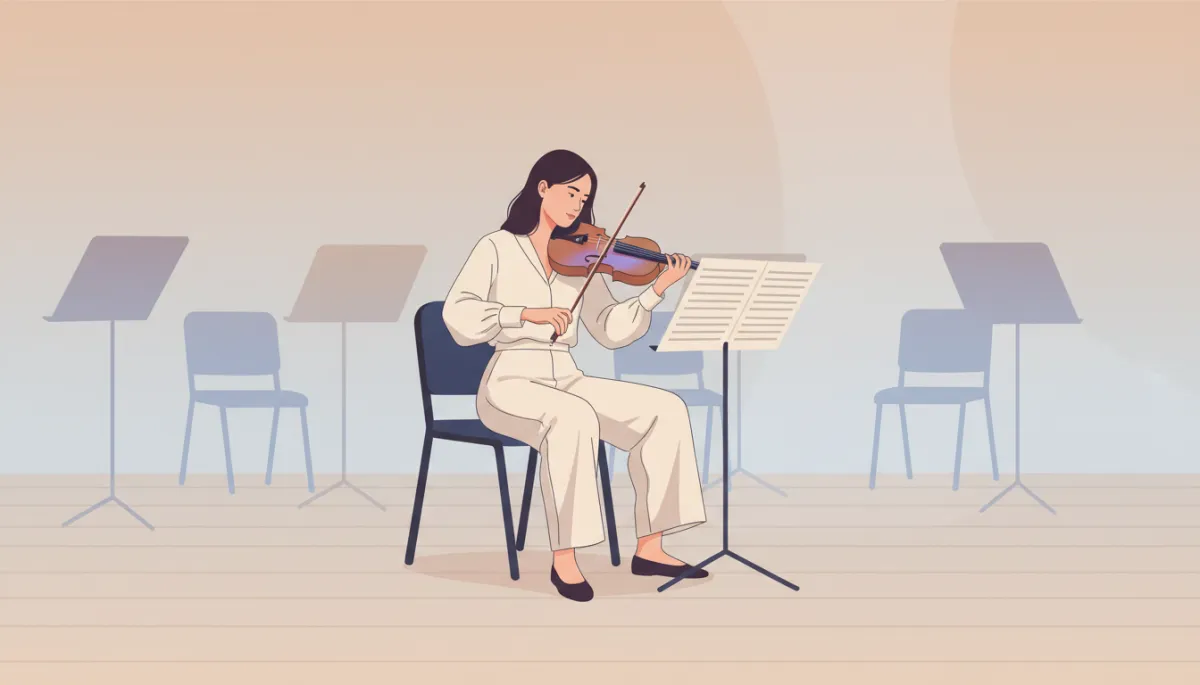
In the solitude of the practice room, music becomes both mirror and friend.
Dear Tchaikovsky: When Composers Become Companions
There is something profoundly moving about watching a young person befriend a long-dead composer. Tchaikovsky, after all, never imagined a teenage violist in a modern dorm room, headphones on, laptop open, pausing between practice sessions to send him a digital love letter via Facebook. Yet across time and distance, his music has become a kind of emotional shorthand for her: a way to say, “I miss home,” “I feel alone,” “I am overwhelmed,” and also, “I am thrilled to be alive and here and doing this terrifyingly beautiful thing.”
When she writes, “we have become best friends,” she is not being dramatic. Anyone who has ever fallen in love with a piece of music, a book, a painting, or a film knows that art can become a kind of presence in your life—a steady, patient witness to your changing seasons. Tchaikovsky’s music is full of big feelings: longing, heartbreak, wild joy, tension that builds and builds until it feels almost unbearable. It meets her exactly where she is, in the heightened emotional landscape of late adolescence, where everything feels new, intense, and unfiltered. In his symphonies and concertos, she hears permission to feel everything she is feeling, fully and without apology.
💡 Quiet Truth: Sometimes the people who understand us best are the ones we never meet—composers, writers, artists whose work gives shape to what we cannot yet say out loud.
The Loneliness of New Beginnings—and the Gift Inside It
We often romanticize “new beginnings.” We talk about fresh starts as if they are all excitement and opportunity. But anyone who has truly started over—in a new city, a new job, a new relationship, or a new version of themselves—knows that beginnings are rarely tidy. They are messy and disorienting. You are surrounded by people, yet you feel profoundly alone. You are technically “in,” but emotionally, you are still hovering on the threshold, not quite sure where to place your bags, your trust, your heart.
Lolo’s first weeks at college were full of this tension. There were rehearsals and syllabi and orientation events, yes—but also long stretches of quiet. Evenings when the hallways hummed with conversations she was not yet part of. Meals eaten at small, unfamiliar tables. Late nights in the practice room where the only other sound was the faint echo of someone else warming up two doors down. In those moments, it could have been easy to numb out—scrolling endlessly, distracting herself from the ache of being in-between. Instead, she leaned in. She practiced. She listened. She let Tchaikovsky, and all the others on her playlist, sit with her in the silence instead of trying to drown it out.
“Loneliness is still time spent with the world.”
— Ocean Vuong
In her case, loneliness became time spent with Tchaikovsky, with her viola, with the version of herself that only emerges when no one else is around. That is a gift most of us do not recognize until much later in life: the way solitude can strip away the noise and leave you face to face with what you truly love, what you truly want, and who you are when you are not performing for anyone else’s expectations.
Clarity at 18: Knowing What You Love Before the World Tells You Otherwise
In my work with adults—people in their thirties, forties, fifties, and beyond—I am often struck by how many of them struggle to answer a question that Lolo can answer easily: What do you love? Not what you are good at, not what pays the bills, not what other people admire you for—but what lights you up from the inside, what you would choose to do even if no one were watching, even if it never made it to a résumé or a LinkedIn profile. For Lolo, that answer is music. She may not know exactly where it will lead her yet—whether to orchestras, teaching, composing, or something else entirely—but she knows that this is the world she wants to inhabit, the language she wants to speak fluently for the rest of her life.
There is something quietly radical about a young woman choosing art in a culture that often measures worth in productivity, prestige, and predictable outcomes. Scholarships help, of course, but the decision to pursue music is still, in many ways, an act of faith—faith in her talent, in her work ethic, and in the belief that a life built around beauty and expression is not just possible, but worthwhile. Watching her, I am reminded that clarity is not about having a five-year plan. It is about knowing the next right step, the next honest practice session, the next audition, the next piece that calls your name and refuses to let go until you have given it your full attention.
📌 Key Takeaway: Clarity is not a detailed map—it is a compass that points toward what you love, even when the path is still unfolding.
Energy Bursting at the Seams: Being Open to Adventure and Growth
When I think of Lolo, I picture her walking across campus, viola case slung over her shoulder, hair pulled back, eyes scanning everything with an alert, delighted curiosity. She is open to adventure, eager to grow. There is a kind of energy around her that feels like a page about to be turned, a curtain about to rise. She is not naïve; she knows that hard days will come, that auditions will not always go her way, that homesickness will sneak up on her at odd moments—at the grocery store, in the middle of a rehearsal, while folding laundry in a communal room. But she also knows that this is the trade: discomfort in exchange for expansion, uncertainty in exchange for possibility.
There is a lesson here for all of us, regardless of age. Growth rarely comes wrapped in comfort. The moments that shape us most are often the ones that stretch us beyond what we thought we could handle: the move, the breakup, the new job, the big risk. Lolo’s story is not just about a talented young musician; it is about the universal experience of standing on the edge of your own life and choosing, bravely, to jump anyway—instrument in hand, heart in your throat, soundtrack by Tchaikovsky.
Writing Your Future in Your Own Hand, In Your Own Time
One of the things I love most about Lolo is how clear she is that her future will be written by her own hand, in her own time. She is not rushing to meet someone else’s timeline of success. She is not trying to cram her dreams into a neat, socially acceptable box. She is willing to let her path unfold measure by measure, like a piece of music that reveals itself slowly, with each bar bringing a new theme, a new key change, a new dynamic marking that asks something different of her. She trusts that if she keeps showing up—in the practice room, on stage, in her classes, in her relationships—the shape of her life will emerge, even if she cannot yet see the entire score.
Many of us could use that reminder. We live in a culture obsessed with speed and certainty. We feel pressure to “have it all figured out” by 25, 30, 40, as if life were a race and the winners are those who settle on a definitive storyline the fastest. But the truth is, the most interesting lives are often the ones that take their time. They loop back, they change tempo, they pause for breath. They follow curiosity instead of convention. They allow for rest, for detours, for entirely new movements we never saw coming. Lolo’s willingness to move at the pace of her own becoming—to let her love of music lead, even when the destination is unclear—is a kind of quiet rebellion against the tyranny of “should.”
What Lolo—and Tchaikovsky—Can Teach the Rest of Us
You do not have to be 18, or a musician, or starting college to recognize yourself in this story. Most of us, at some point, find ourselves far from home—geographically, emotionally, or spiritually. We look around and realize that the people and structures that once defined us are no longer right there, within arm’s reach. Maybe we have changed jobs, moved countries, ended a relationship, or simply woken up one day and realized that the life we are living no longer feels like it belongs to us. In those moments, we have a choice: to cling to the familiar, or to open ourselves to the unknown and see what new friendships—human or artistic—might be waiting for us there.
Lolo chose openness. She chose to befriend a composer across time, to let his music hold her hand as she stepped into her new life. She chose to trust her passion, even when it meant leaving the safety of home. She chose to believe that her story is worth writing in her own messy, beautiful handwriting, rather than copying someone else’s script. And in doing so, she offers us all a gentle invitation:
To remember what we loved before the world told us to be practical.
To allow art—music, books, films, paintings—to be more than background noise, to let it companion us when life feels too big to handle alone.
To accept that loneliness is often the doorway to deeper self-knowledge and new connection, not a sign that we have done something wrong.
To give ourselves permission to write our futures slowly, honestly, and in our own handwriting, even if the lines wobble and the ink smudges along the way.
A Letter Back to Lolo—and to the 18-Year-Old in All of Us
If I could write a letter back to that Facebook post, to that young woman sitting on her dorm room floor with her viola leaning against the bed and Tchaikovsky in her ears, it might sound something like this:
Dear Lolo,
Hold on to this friendship—with Tchaikovsky, with your viola, with the part of you that is brave enough to feel everything. There will be days when the music feels heavy, when the notes blur, when the future seems like an unsolvable equation. On those days, remember that you have already done something extraordinary: you have chosen yourself. You have chosen your passion. You have chosen to walk into the unknown with open eyes and a full heart.
Keep practicing. Keep listening. Keep writing your life in your own hand, one measure at a time. The world needs people who are willing to feel deeply, to create beauty, and to follow the quiet, insistent pull of what they love. You are already one of them.
With so much admiration,
Someone who is still learning to do the same
And maybe, if we are honest, that letter is not just for her. It is for the 18-year-old that still lives inside each of us—the one who once knew, with startling clarity, what made our hearts race. The one who wrote bad poetry, or danced in the kitchen, or stayed up late learning guitar chords, or filled sketchbooks with drawings no one else ever saw. The one who wanted to move away, or start something new, or say “yes” to an adventure that adults around them did not fully understand. That part of us does not disappear; it just gets quieter under the weight of responsibilities and routines. Lolo’s post, her “Dear Tchaikovsky,” is a reminder to listen for that voice again, to ask it what it wants now, all these years later.
Closing Cadence: Letting the Music Lead
When I think back to that simple Facebook status, I understand why it moved me to tears. It was not just the sweetness of a teenager befriending a long-gone composer, or the pride I felt in watching someone I care about step into her own life so fully. It was the recognition that, in her words, there was a kind of wisdom I am still trying to live by: the courage to go alone, the openness to feel deeply, the clarity to follow what you love, and the patience to let your story unfold in its own time.
We may not all address letters to Tchaikovsky, but we all have our own version of that friendship—some piece of art, some practice, some passion that has walked beside us through the loneliest, most uncertain chapters of our lives. The question is whether we will honor it, make time for it, and let it guide us toward the next true thing. Whether you are 18 or 80, starting college or starting over, perhaps the invitation is the same: find what feels like a best friend to your soul, and let it sit with you as you write the next page.
Somewhere, in a practice room or a dorm room or a small apartment in a city you have not visited yet, someone is pressing play on a piece of music that will change them. They may not know it now, but years later, they will look back and say, “That was when everything shifted. That was when I started to become myself.” For Lolo, that soundtrack is Tchaikovsky. For you, it might be something else entirely. Whatever it is, may you be brave enough to listen—and to follow where it leads.
