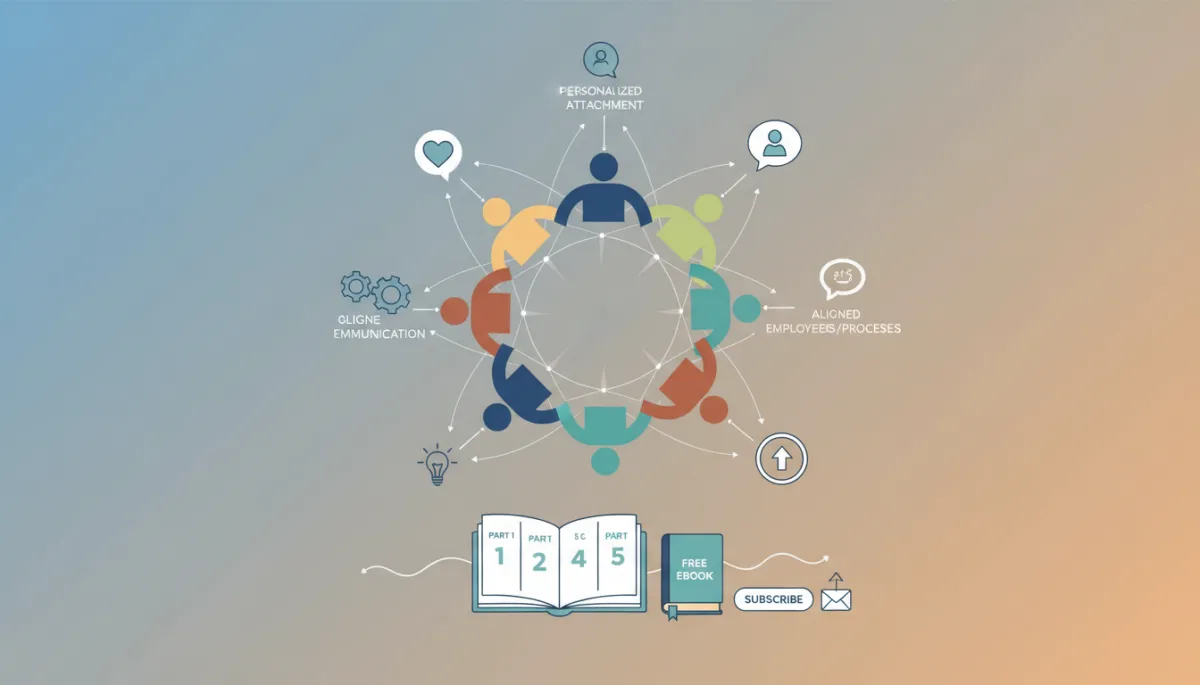
Building Client Loyalty for Recession Success
Client Loyalty, Recession Success, Customer Experience
Creating a Community of Clients: Part 1 of Your Recession Success Series
In a recession-minded economy, surviving isn’t enough. The businesses that truly thrive are the ones that transform their customers into a loyal community of clients—people who feel connected to you, advocate for you, and stay with you even when every dollar is under scrutiny. This is Part 1 of a 5-part series on Recession Success, and it lays the foundation: how to create a community of clients who see you as more than a vendor and your services as more than a transaction.
From “Customer List” to Client Community
Many businesses say they are “customer focused,” but their day-to-day behavior tells a different story. Clients are treated as order numbers, invoices, or email addresses on a list. In good economic times, that may be enough to get by. In a recession, it is a recipe for churn. People buy less, compare more, and quickly cut ties with any brand that feels distant, generic, or purely transactional.
Building a community of clients means treating people as more than customers. It means designing your business around relationships, not just revenue. A community is a group of people who feel seen, heard, and valued. They share a sense of belonging and identity around your brand and the outcomes you help them achieve. When you build that kind of community, price becomes less of a deciding factor, loyalty deepens, and your business becomes more resilient—exactly what you need during economic uncertainty.
📌 Key Takeaway: In a recession, the businesses that win are not just the cheapest; they are the ones whose clients feel emotionally connected and personally cared for.
Treating Clients as People, Not Transactions
A community begins with a mindset shift: your clients are not “accounts” to be managed; they are people with goals, pressures, fears, and dreams. When you recognize that, your behavior changes. You ask different questions. You listen more closely. You remember details that matter to them. You follow up, even when there is nothing to sell. This is where loyalty is born—long before a renewal, upsell, or referral ever happens.
Treating clients as more than customers shows up in small, consistent actions:
Using their name and remembering past conversations, not just their account number or company name.
Asking how decisions will impact them personally, not only their department or budget line.
Reaching out with helpful resources, introductions, or ideas—even when there is no immediate financial gain for you.
These behaviors communicate a powerful message: “You matter to us beyond the sale.” In a recession, when anxiety is high and trust is fragile, that message is priceless. Clients gravitate toward partners who genuinely care about their success and well-being, not just their wallet.
Fostering Emotional Attachment: Why Feelings Drive Loyalty
Emotional attachment is the invisible glue of a client community. It’s the reason someone says, “I trust them,” “They always take care of us,” or “I’d never switch, even if someone was cheaper.” When clients feel emotionally attached to your business, they become less sensitive to price, more forgiving of occasional mistakes, and more likely to recommend you to others. That is exactly the kind of stability you want when the economic climate is unstable.
Emotional attachment doesn’t happen by accident. It is the result of repeated experiences where clients feel:
Understood – You “get” their world, their pressures, and their aspirations.
Safe – They trust your advice and feel confident you will stand by them when things go wrong.
Valued – You notice their loyalty, acknowledge their contributions, and thank them sincerely.
Included – They feel like insiders, part of a group that gets special access, early insights, or extra care.
💡 Pro Tip: Ask yourself, “What do our clients feel after interacting with us?” If the honest answer is “nothing special,” you have a major opportunity to build emotional attachment.
Creating Consistent, Personalized Experiences at Every Touchpoint
Consistency builds trust; personalization builds connection. You need both to create a true community of clients. A single great interaction can’t carry a relationship for long. Loyalty grows when clients experience the same level of care, responsiveness, and relevance every time they call, click, visit, or message your business—regardless of which team member they interact with or which channel they use.

-toned photo of a customer service representative and a client reviewing documents together at a...
Personalized, consistent interactions turn routine service moments into lasting relationship builders.
To deliver consistent, personalized experiences, start by mapping your client journey. List the key touchpoints—from the first inquiry to onboarding, support, renewal, and follow-up. Then ask for each stage:
What should every client experience every time? This forms your non-negotiable service standards: response times, tone of communication, clarity of information, and follow-up expectations.
Where can we personalize? This is where you add details that reflect each client’s preferences, history, and goals—referencing previous projects, adapting recommendations, or tailoring communication frequency and format.
Personalization doesn’t always require sophisticated technology. Simple actions—like sending a handwritten note after a major milestone, remembering a client’s upcoming product launch, or acknowledging a challenging quarter—signal that you see them as individuals, not revenue streams. When these gestures are woven into a reliable, consistent experience, clients feel both secure and special, a powerful combination in uncertain times.
Strategies for Truly Understanding Customer Needs
You cannot build a community of clients if you only understand them at the surface level. In a recession-minded economy, needs shift quickly. What mattered last year may be irrelevant today. That’s why you must move beyond assumptions and actively, regularly, and systematically listen to your clients. Understanding their needs is not a one-time research project; it is an ongoing discipline.
1. Ask Better Questions in Every Conversation
Train yourself and your team to go beyond “What do you need today?” and explore context, constraints, and desired outcomes. Questions like:
“What’s the bigger goal behind this project?”
“What are you most worried about this quarter?”
“If this goes really well, what will success look like for you personally?”
These questions reveal emotional drivers, hidden constraints, and personal stakes—the information you need to serve clients at a deeper level and strengthen the relationship.
2. Use Simple, Human Surveys and Feedback Loops
Formal surveys can be useful, but they often feel cold and corporate. Consider shorter, more conversational check-ins: a two-question email after a project, a quick pulse survey in your newsletter, or a personal call from a leader asking, “How are we doing, honestly?” The key is to:
Make it easy to respond (short and clear).
Show you listened by sharing what you learned and what you will change.
💡 Pro Tip: Close the loop. When clients see you act on their feedback, they feel respected and are more likely to share openly in the future.
3. Watch Behavior, Not Just Words
Clients don’t always articulate their needs clearly, especially in times of stress. Pay attention to what they do: which services they use most, which emails they open, which events they attend, and where they drop off. These patterns reveal priorities and pain points you can address proactively. Even simple tracking—like noting common questions or repeated requests—can guide you toward more relevant offerings and communications.
Aligning Employees with a Clear Service Vision
You cannot build a community of clients if only a few people in your organization “get it.” Every interaction shapes the client’s perception, whether it comes from sales, service, billing, or support. That’s why you need a clear service vision—a simple, memorable statement that defines how you want clients to feel when they work with you—and you must align your entire team around it.
Define the Experience You Promise
A service vision might be something like, “We make every client feel supported, understood, and one step ahead,” or “We are the calm, prepared partner in our clients’ most stressful moments.” The exact words are less important than the clarity. Your team should be able to repeat it and use it as a filter for daily decisions: “Does this email, policy, or process support our vision?”
Train for Mindset, Not Just Procedures
Procedures matter, but they are not enough. To create a true community, employees must understand why you serve clients the way you do, not just how. Incorporate stories into training: share examples of team members who went above and beyond, saved a client from a major issue, or turned a complaint into a deeper relationship. Celebrate these stories publicly so people see that relational excellence is valued, not just speed or volume.
Empower Employees to Act in the Client’s Best Interest
In a recession, rigid policies can push clients away. Empower your team with guidelines and guardrails, but give them room to make judgment calls that protect the relationship. That might mean waiving a minor fee for a long-term client, offering a creative payment plan, or spending extra time educating a client who is anxious about a decision. When employees know they are trusted to do what’s right for the client, they become active builders of your client community, not just task executors.
📌 Key Takeaway: Your service vision should live in daily behaviors, not just on a poster. Alignment happens when every employee understands the desired client experience and has permission to create it.
Maintaining Ongoing Communication Through Multiple Channels
Communities are built through conversation, not one-time campaigns. Especially in a recession-minded economy, silence can be misinterpreted as indifference or instability. Your clients need to hear from you regularly—and not only when you are selling something. Ongoing communication keeps you top of mind, reinforces trust, and creates space for two-way dialogue.
Blend Channels, Keep the Voice Consistent
Use a mix of channels—email, phone, video calls, social media, live events, webinars, even handwritten notes—but maintain a consistent tone: human, helpful, and aligned with your service vision. For example:
A monthly email that shares practical insights tailored to your clients’ current challenges, not generic industry news.
Short check-in calls or messages that simply ask, “How are things going for you this month? Anything we can help with?”
Occasional personal notes to recognize milestones—anniversaries, product launches, awards, or even challenges they’ve overcome.
Make Communication a Two-Way Street
True community isn’t a broadcast; it’s a dialogue. Invite responses. Ask for opinions. Host Q&A sessions. Create small client advisory groups where you share upcoming ideas and ask for candid feedback. When clients see that their voice shapes your decisions, they feel invested in your success as well as their own. That mutual investment is what turns a customer base into a community.
Thinking Outside the Box: Creative Ways to Engage Clients in Tough Times
In a recession-minded economy, doing what you’ve always done is rarely enough. Your clients are under pressure to cut costs, justify every purchase, and prove ROI quickly. To stay relevant and valuable, you must think beyond standard touchpoints and find creative ways to support, educate, and connect your clients—sometimes in ways that don’t look like “selling” at all.
Host small, focused roundtables where clients in similar roles can share strategies, ask questions, and learn from each other—with you facilitating the conversation and adding your expertise.
Create resource bundles tailored to current challenges—checklists, templates, or guides that help them do more with less, make decisions faster, or communicate value to their own stakeholders.
Offer “office hours” where clients can drop in virtually to ask questions, brainstorm, or get quick feedback without scheduling a formal meeting.
💡 Pro Tip: When you think outside the box, ask, “What would I do for clients if I weren’t trying to sell anything at all?” The answers often lead to your most powerful community-building ideas.
Taking Action Daily: Small Steps, Big Community
A community of clients is not built in a single campaign or quarter. It is built through daily actions—the small, consistent choices you and your team make to reach out, follow up, listen, and serve. In a recession-minded economy, it’s tempting to wait for “the right moment” or “more stability” before investing in relationships. The reality is the opposite: the right time is now, and progress comes from steady, intentional effort.
Build a Simple Daily Client Ritual
Encourage every client-facing professional in your organization to adopt a daily ritual, such as:
Reaching out to three clients per day with a personalized note or helpful resource.
Reviewing one client account each day and asking, “What could we do to add more value this month?”
Sharing one positive client story in your internal channels to reinforce your service vision.
These habits may feel small in the moment, but over weeks and months, they create a powerful ripple effect. Clients experience more touchpoints, more care, and more relevance. Your team becomes more attuned to client needs and more confident in building relationships. The result is a stronger, more connected client community that supports your business through any economic cycle.
Measure What Matters: Relationship, Not Just Revenue
If you only measure sales, your team will only focus on sales. To reinforce daily action toward community-building, track indicators of relationship health as well: client retention, referrals, engagement with your content, and participation in events or advisory groups. Celebrate not just the big deals, but also the meaningful conversations, saved accounts, and improved satisfaction scores. These are the signs that your community is growing stronger—even before the revenue shows it.
Your Next Step: Commit to Community in a Recession-Minded Economy
Creating a community of clients is not a “nice to have” project for better times. It is a strategic necessity in a recession-minded economy. When markets tighten, your competitors will race to discount, cut service, and chase quick wins. You will stand out by doing the opposite: treating clients as people, fostering emotional attachment, delivering consistent and personalized experiences, understanding their evolving needs, aligning your employees with a powerful service vision, and communicating proactively across multiple channels.
Most importantly, you will commit to daily action—the small, thoughtful steps that transform a list of customers into a resilient, loyal community of clients. This community becomes your greatest asset in uncertain times: a network of people who choose you, advocate for you, and grow with you, even when the economy is unpredictable.
📌 Key Takeaway: You can’t control the economy, but you can control how you show up for your clients every single day.
Don’t Miss Parts 2–5: Build Your Complete Recession Success Playbook
This article is just the beginning. In Part 1, you’ve explored how to create a community of clients by elevating relationships above transactions and taking daily action to nurture loyalty. In the next four parts of this Recession Success series, you’ll go deeper into the strategies that help your business not only weather economic storms but emerge stronger:
How to refine and reposition your value in a cautious market.
How to protect margins without sacrificing service quality.
How to turn your client community into a powerful referral engine.
How to design systems that keep you resilient and agile in any economy.
To make sure you don’t miss any part of the series—and to receive the complete Recession Success ebook when it’s released—take one simple step now: subscribe. As a subscriber, you’ll get each new article delivered directly to your inbox, along with practical tools, templates, and examples you can apply immediately with your clients and your team.
Your clients are looking for more than a supplier. They are looking for a steady partner, a trusted guide, and a community they can rely on. Start building that community today—and let this 5-part series and the free ebook be your roadmap to recession success.
