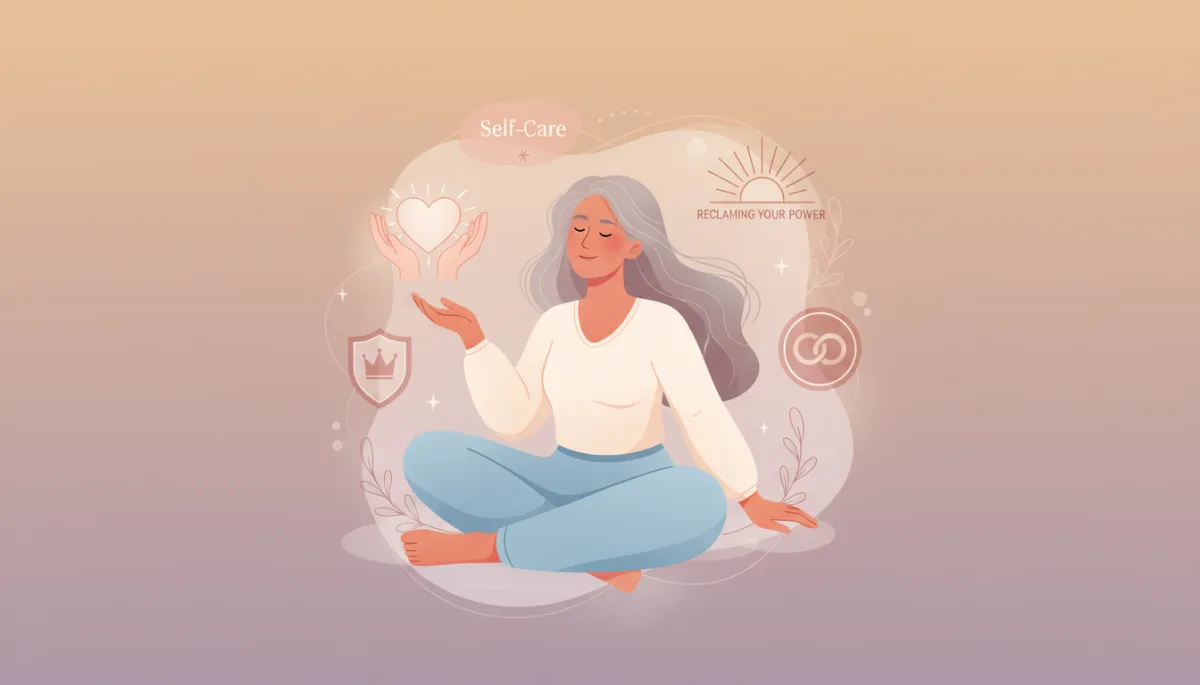
Authentic Living and Self-Care After 40
Self-Care, Authentic Living, Boundaries, Women Over 40
Living an Authentic Life with Intention and Self-Love After 40
There comes a moment, often somewhere after 40, when you look at your life and quietly ask, “Is this really me?” It’s a brave question. It’s also the doorway to living more authentically—with intention, self-love, and a deep sense of respect for who you truly are. This journey begins with self-care, reclaiming your power, and creating boundaries that protect your peace.
What It Really Means to Live Authentically
Authentic living is not about having a perfect life, the “right” job, or a flawless relationship. It’s about alignment—making your outer life match your inner truth as closely as possible. It means your choices, words, and habits reflect what you genuinely value, not what you’ve been told you should value.
For many women over 40, this is the season when the mask starts to feel too heavy. You may have spent years prioritizing children, partners, parents, employers, and expectations. You’ve been the reliable one, the fixer, the peacekeeper. Authentic living invites you to ask: What if I allowed myself to be fully, honestly me?
📌 Key Takeaway: Authenticity is not a destination. It’s a daily practice of choosing truth over approval and self-respect over people-pleasing.
Self-Care: The Foundation of an Honest, Intentional Life
Authentic living begins with self-care—not the trendy, picture-perfect version, but the grounded, sometimes unglamorous commitment to your own well-being. Self-care is the way you tell yourself, “My needs matter. My body, mind, and heart are worth tending to.” Without it, everything else—boundaries, confidence, purpose—sits on shaky ground.
The Real Benefits of Self-Care Activities
When you consistently care for yourself, you experience benefits that go far beyond feeling “relaxed.” Some of the most powerful include:
Clarity: Quiet walks, journaling, or a few minutes of deep breathing help you hear your own voice beneath the noise of others’ opinions.
Emotional resilience: Rested, nourished, and supported, you’re less likely to react from exhaustion or resentment and more likely to respond from wisdom.
Self-respect: Each time you honor your needs, you reinforce the belief that you are worthy of care, time, and attention.
Healthier relationships: When you’re not running on empty, you can show up more fully present, with clearer communication and less resentment.
💡 Pro Tip: Think of self-care as maintenance, not a reward. You don’t have to “earn” rest or kindness toward yourself.
Simple Self-Care Ideas for Women Over 40
You don’t need a week-long retreat to begin. Start with small, realistic actions that fit your life:
A 10-minute morning ritual: tea, a candle, and three deep breaths before you touch your phone or email.
A weekly “non-negotiable” block on your calendar for something that nourishes you—yoga, reading, a bath, or a quiet drive alone.
Regular health check-ins: honoring your body with sleep, movement that feels good, and medical appointments you’ve been postponing.

Consistent, simple self-care rituals quietly rebuild energy, clarity, and self-respect over time.
Reclaiming Your Power: Remembering You Are the Author of Your Life
Reclaiming your power doesn’t mean becoming hard, aggressive, or unapproachable. It means remembering that you are the one who ultimately chooses how you live, what you tolerate, and where your energy goes. For years, you may have handed that power to others—by always saying yes, by shrinking your needs, or by believing that your worth depended on how much you did for everyone else.
Reclaiming your power is a gentle but firm shift from “What will they think?” to “What feels right and honest for me?” It is the decision to stop apologizing for existing and start living as if your life is yours—because it is.
Believing in Yourself, Even When You’re Out of Practice
If you’ve spent decades prioritizing others, believing in yourself might feel unfamiliar, even selfish. It isn’t. Self-belief is the quiet inner knowing that your desires, ideas, and feelings are valid. You don’t have to be loud or certain all the time. You simply need to be willing to trust your own experience.
Start small: Choose one area where you’ll trust your judgment—what you wear, how you spend a Saturday, or which invitations you accept.
Collect evidence: Notice and write down moments when listening to yourself led to relief, peace, or joy.
Borrow belief: If self-belief feels out of reach, ask, “What would I tell a dear friend in my situation?” Then offer that same faith to yourself.
Practicing Positive Self-Talk That Feels Honest, Not Fake
Positive self-talk is not about pretending everything is perfect. It’s about refusing to be your own bully. Many women over 40 carry an inner voice that says, “You’re too old,” “You’re behind,” or “You should have it all figured out by now.” That voice is not truth; it’s conditioning.
Begin by simply noticing how you speak to yourself. Would you talk to your best friend that way? If not, it’s time to shift. Try replacing harsh thoughts with statements that are both kind and believable:
From “I’m failing at everything” to “I’m doing the best I can with what I know right now.”
From “It’s too late for me” to “I can still choose what I want next.”
From “I’m not enough” to “I am learning to see my own worth.”
💡 Pro Tip: Write three supportive phrases on sticky notes and place them where you’ll see them daily—your mirror, laptop, or nightstand.
Creating Boundaries: Protecting Your Energy and Your Truth
Boundaries are not walls to keep people out; they are doors that you control. Creating boundaries is how you protect your time, energy, and emotional well-being so you can live honestly instead of living on autopilot or in quiet resentment. Without boundaries, self-care becomes a nice idea that never makes it onto your calendar, and your power slowly leaks away in a thousand small “yeses” you didn’t really mean.
Setting Limits and Saying “No” When Necessary
Limits are the lines you draw around what you will and won’t accept. They might relate to your time, your body, your finances, your emotional space, or your values. Saying “no” is one of the most powerful tools you have for honoring those limits—and for many women, it’s also one of the hardest.
You’re allowed to say no to social events that leave you drained, even if you have no “good” excuse other than needing rest.
You’re allowed to say no to unpaid emotional labor—being the family therapist, mediator, or constant fixer—when it costs you your peace.
You’re allowed to say no to conversations that feel disrespectful, to work that underpays you, and to relationships that consistently disregard your needs.
At first, saying “no” may feel uncomfortable, even guilt-inducing. That’s normal. You’re rewriting a lifelong script that said your value was measured by how much you gave. Over time, each honest “no” becomes an act of self-respect—and creates space for the “yeses” that truly matter to you.
💡 Pro Tip: Try simple boundary phrases like “That doesn’t work for me,” “I’m not available for that,” or “Let me think about it and get back to you.”
Tips for Women Over 40: Living Honestly and Fulfilling Your True Self
Midlife can be a powerful turning point. You’ve gathered wisdom, survived challenges, and learned what doesn’t work. Now you have the chance to live more honestly than ever before. Here are practical ways to begin:
1. Tell Yourself the Truth First
Living honestly starts privately. Before you change anything on the outside, allow yourself to acknowledge what’s true on the inside:
“I am exhausted from pretending I’m okay with this.”
“I want more joy, creativity, or rest than I’ve allowed myself.”
“This version of my life doesn’t fit me anymore.”
You don’t have to announce these truths to anyone yet. Simply acknowledging them is an act of courage and the first step toward an authentic, intentional life.
2. Redefine Success on Your Own Terms
For years, success may have meant being everything to everyone—productive, accommodating, always available. Now, you get to decide what success looks like for you. Maybe it’s having slower mornings, more creative time, deeper friendships, or a career shift that finally reflects your values. Write your own definition and let it guide your decisions, even if others don’t fully understand it.
3. Take Small, Honest Steps Instead of Giant Leaps
You don’t have to overhaul your entire life at once. In fact, sustainable change usually happens through small, consistent steps. Ask yourself:
What is one small way I can honor my truth this week?
What is one tiny boundary I can practice—perhaps leaving a gathering earlier, or not checking work email after a certain time?
What is one self-care activity I can commit to regularly, even if it’s only five minutes?
These small steps build trust with yourself. They’re how you move toward an honest lifestyle full of purpose and self-respect—one decision at a time.
Creating a Lifestyle of Purpose and Self-Respect
An authentic life is not just about what you do; it’s about how you relate to yourself along the way. Purpose and self-respect grow from the daily choices you make: the way you talk to yourself, the boundaries you set, the care you give your body, and the honesty you bring to your relationships and commitments.
A Gentle Roadmap for Moving Forward
Notice: Become aware of where you feel out of alignment—where your “yes” feels like a “no,” where your life feels too small or too crowded.
Nurture: Strengthen your self-care habits, even in tiny ways, so you have the energy and clarity to make changes.
Name: Put words to what you want now—not what you wanted at 20 or what others want for you today.
Negotiate: Begin setting limits and boundaries that honor your truth, even if they feel unfamiliar at first.
Nourish: Surround yourself with people, practices, and environments that reflect the life you’re creating, not the one you’re leaving behind.
Your Life, Your Terms: An Invitation to Begin Today
You do not have to wait for the “right” time to start living more authentically. You don’t need anyone’s permission to care for yourself, reclaim your power, or create boundaries that protect your well-being. You are allowed to change your mind, to evolve, and to choose a life that feels honest and meaningful to you—especially now, especially after 40, when your wisdom runs deeper than ever.
Today, choose one small step: a kind word to yourself, a five-minute self-care practice, a single “no” that honors your limits, or a moment of truth in your journal. These are not insignificant gestures. They are the building blocks of a life lived with intention, self-love, and unshakable self-respect.
Your authentic life is not somewhere out there in the future. It begins in the quiet, courageous choices you make today—choices that say, clearly and unapologetically, “This is who I am, and I am worthy of living in alignment with my truth.”
